
Removals in Well Hall, South East London
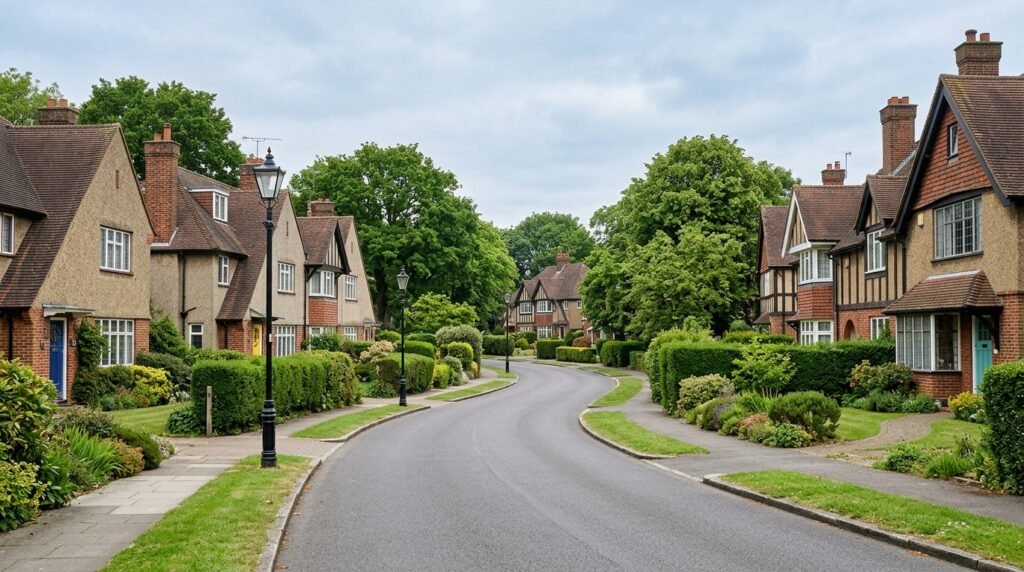
Well Hall is the historic northern corner of Eltham, in SE9, built around the Progress Estate, the most spectacular of the garden suburbs the government created in the First World War to house Woolwich Arsenal workers. Laid out on garden-city lines in 1915 and now a conservation area, it wraps around Well Hall Pleasaunce, with its Tudor Barn and moat once home to Sir Thomas More’s daughter. Characterful period homes here typically run from around £475K to £575K. Eltham station is close. We handle moves across the whole area.
The Garden Suburb Built for a War
Well Hall’s character was shaped almost overnight by the First World War. When war broke out in 1914, the Woolwich Arsenal munitions factories needed many more skilled workers, and those workers needed housing close by. The government acquired around 96 acres of farmland on either side of Well Hall Road and, under the Housing Act 1914, HM Office of Works built an entire estate in under a year, completing it by December 1915. Construction workers were drafted in from all over London to get it built at speed. The result has been described as ‘the first and most spectacular of the garden suburbs built by the government during the First World War to house munitions workers’, and it was important enough that Queen Mary visited in 1916.
The estate comprises 1,086 houses and 212 flats, laid out on garden-city lines with curving streets, varied rooflines, generous planting, and the Arts and Crafts detailing that makes it instantly recognisable. Its streets were named after men with historical associations with Woolwich, mostly in munitions, with one charming exception: Lovelace Green, named after the poet Richard Lovelace, born at Woolwich in 1618 and best known for the line ‘Stone walls do not a prison make’. In 1925 the government sold the estate to the Royal Arsenal Co-operative Society, which renamed it the Progress Estate, the name it still carries. Today it is a conservation area, protected for its unique design.
Layered beneath all this is a much older history. Well Hall was recorded in the 13th century, and its great house was built for Sir William Roper and his wife Margaret, the daughter of Sir Thomas More, after their marriage in 1521. Sir Gregory Page bought it in the 1730s and pulled the house down, but the inner moat and the barn survived. The 16th-century Tudor Barn now serves as a restaurant, function venue, and art gallery within Well Hall Pleasaunce, the formal gardens and woodland laid out in 1931 and once called ‘the jewel of the Council’s open spaces’. The Railway Children author E. Nesbit lived at Well Hall.
Well Hall is part of our wider Eltham coverage area. If you’d like to see how we handle the rest of SE9 and the surrounding patch, the parent page covers it.
The Progress Estate and the Pleasaunce: Property Tiers
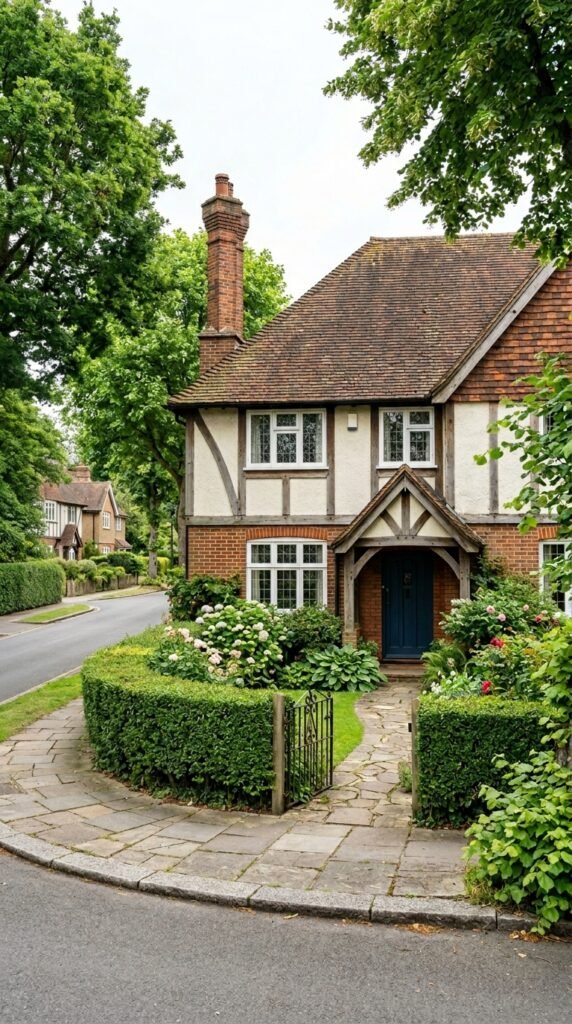
Well Hall’s property market is shaped almost entirely by the Progress Estate and its conservation-area character. Three broad tiers operate, all carrying the distinctive garden-suburb feel that makes the area so sought-after.
Estate flats and entry tier (£275K to £425K)
The Progress Estate’s 212 flats, plus maisonettes and smaller properties within and around the estate, including purpose-built blocks. These carry the same garden-village character as the houses, and offer an accessible entry point into a conservation area. Popular with first-time buyers and those wanting period charm without a full house. Move logistics are typical flat moves, half-day to short full-day jobs, with the conservation-area access considerations covered below.
Progress Estate houses (£425K to £575K)
The heart of the market: the Arts and Crafts houses built by the Office of Works in 1915, two and three-bedroom homes with steep roofs, casement windows, and original period detailing, on the estate’s curving garden-village streets. Sought-after for their character and their conservation-area setting. Standard family ownership, often long-held. Full-day moves with two or three crew, with heritage handling for the original features.
Larger character and extended homes (£575K to £700K-plus)
The larger Progress Estate houses and the more substantial period and character properties in and around Well Hall, some extended, some with the more generous garden-village plots. Long ownership is common, producing substantial move volumes. Full-day-plus jobs with three or four crew, full heritage-property handling.
Conservation-Area Move Logistics
Moving on the Progress Estate is mostly about two things: the garden-village street layout, and the original character of the houses. Neither is a problem, but both shape how we plan the day, and the conservation-area status raises a question worth answering directly.
Garden-village street access
The Progress Estate was laid out on garden-city lines, which means curving streets, varied building lines, greens, and some narrower roads and closes than a conventional grid. Most of the estate takes a standard 7.5-tonne Luton van without issue, but for the tighter sections and the properties set back behind greens, we sometimes bring a 3.5-tonne short-wheelbase van for an easier approach, with the same capacity for a typical move. We know the estate layout and plan the vehicle and the parking position before the day.
Original Office of Works house features
The 1915 houses retain period features that need careful handling: original staircases that can be narrower and steeper than modern ones, original door widths, period casement windows, and original floors. Large furniture sometimes needs dismantling to move through the original openings, and we use floor protection and careful carrying throughout. This is standard heritage-property handling, and we bring it as a matter of course for Progress Estate moves rather than treating it as an extra.
Does conservation-area status affect the move?
Not the move itself. Conservation-area rules govern alterations to the buildings (extensions, window replacements, external changes), not the act of moving in or out, so we need no special permission to bring a van and load your belongings. The conservation status simply explains why the houses retain their original features and character, which is what shapes the heritage handling. If you are buying or selling and have questions about what the conservation designation means for future alterations, that is a planning matter for the council rather than something that touches the removal.
Well Hall Road and station-area parking
Well Hall Road (the A208) and Westmount Road carry the local shops and through-traffic, and the streets near Eltham station can have tighter parking during weekday commuter peaks. For properties close to these, we time loading to avoid 7:00-9:30am and 5:00-7:00pm, and arrange a temporary parking suspension where a guaranteed loading spot is needed. Within the quieter estate streets, parking and access are generally straightforward.
Well Hall-Specific FAQs
My Well Hall home is on the Progress Estate, in a conservation area. Does that affect the move?
Not the move itself. Conservation-area status governs changes to the buildings, things like extensions, external alterations, and window replacements, rather than the act of moving in or out, so we need no special permission to bring a van and carry your belongings. What the conservation status does tell us is that the house is likely to retain its original 1915 features (narrower staircases, original door widths, period casement windows, original floors), which is what shapes how we handle the move. We bring floor protection, careful carrying, and furniture dismantling where needed as standard for Progress Estate homes. The designation matters for future building work, which is a council planning matter, but not for the removal.
The Progress Estate streets are narrow and curved. Can a removal van get in?
Yes, with the right vehicle. The estate was built on garden-city lines, so it has curving streets, greens, and some narrower roads than a standard grid layout. Most of it takes our standard 7.5-tonne Luton van without issue, but for the tighter sections, the closes, and properties set back behind greens, we sometimes bring a 3.5-tonne short-wheelbase van for an easier approach, with the same capacity for a typical move. We know the Progress Estate layout well, so if you tell us your street when you book, we will know whether the full-size van fits or whether the smaller one is the better call, and plan the parking position in advance.
Are the original 1915 houses harder to move than modern homes?
A little more careful, not harder. The Office of Works houses retain period features (original staircases, narrower door openings, casement windows, original floors) that mean large furniture sometimes needs dismantling to move through, and that we use floor protection and careful carrying throughout. A move that might be a half-day in a modern equivalent can take a full day in a character Progress Estate house. But this is exactly the kind of period-property work we do across our patch, from the Bromley conservation villages to the Croydon period streets, and we bring the heritage handling as standard rather than as an add-on. The character that makes these houses lovely to live in is simply something we plan around.
Is Well Hall Pleasaunce or the Tudor Barn relevant to a move?
Only as a landmark and a desirability factor, not as a logistics consideration. Well Hall Pleasaunce is the formal gardens and woodland at the centre of the area, with the 16th-century Tudor Barn (now a restaurant and function venue) and the surviving moat. Properties near the Pleasaunce carry a premium for the green outlook and the setting. For a move, the Pleasaunce is public park space, so it does not affect access beyond making the immediate streets more desirable and occasionally busier with visitors on fine weekends. The streets around it are otherwise standard garden-village roads, which we plan the vehicle and parking around as for the rest of the estate.
Moving In or Out of Well Hall?
Send us your postcode, the property type, and your street, so we can plan the right van for the garden-village roads and the heritage handling for a period home. We’ll come back with a quote that fits the job. Usually within an hour during working hours.