
Removals in Cobham, Kent
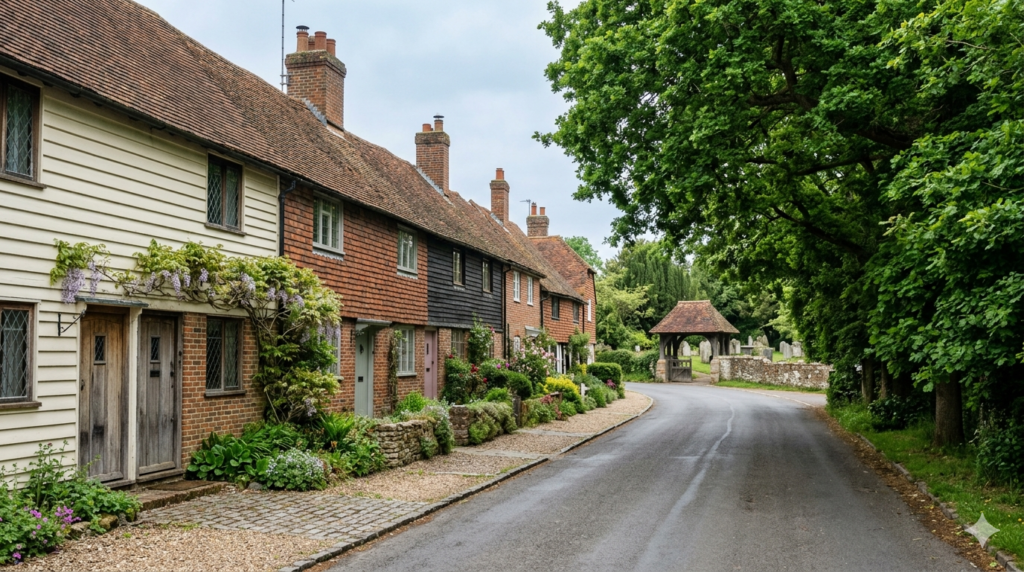
Cobham hasn’t changed much in two centuries. The Street, the Leather Bottle pub from 1629, the lanes running off into Cobham Wood and Ashenbank, it’s the kind of village where residents stay for decades and the moves we do here are mostly people leaving after 30 years or buyers settling in for the next 30. Both are full-day jobs, done carefully.
A Village That Doesn’t Change Much
Drive through Cobham today and the layout is essentially the layout from a 19th-century map. The Street still has the same gentle curve through the village core. The Leather Bottle pub on The Street has been pouring beer since 1629, Charles Dickens stayed in Rooms 2 and 6 of the inn and featured the building in The Pickwick Papers. Cobham Hall, the 16th-century country estate just north of the village, is now a school but the grounds and the surrounding parkland have barely been touched. Owletts, the National Trust property at the end of The Street, dates to 1683. None of this is decorative — it shapes what living in Cobham is actually like.
The DA12 3 postcode contains a few hundred properties spread along The Street, Halfpence Lane, Battle Street, Sole Street’s edge, and the lanes that thread into the surrounding woodland. There are no significant new developments. There never will be, the entire village sits inside a protected landscape area and the surrounding land is owned in large parcels by the National Trust, the Cobham Hall estate, and the Darnley estate. What this means in practical terms is that the housing stock turns over slowly. Most properties have been in the same hands for 15 to 30 years before they come back to market.
For a removal firm, that has a specific consequence. Cobham moves are almost never first-time-buyer moves. They’re almost always either decades-of-possessions downsize moves, or full-family setup-for-decades arrival moves. Either way, the volumes are larger and the timelines are longer than a typical village move.
Cobham is part of our wider Gravesend coverage area. If you’d like to see how we handle the rest of the patch, the parent page covers it.
Moving Substantial Houses After Decades
The defining feature of a Cobham move is volume. A four-bedroom detached house occupied by the same family since 1995 contains roughly three times the volume of contents of the same house occupied for five years. Wardrobes get filled. Lofts accumulate. Garden sheds turn into archives. Garages become storage. Children’s bedrooms become studies become guest rooms become storage rooms. By the time the family is ready to move, the loading list runs to four full Luton vans and a day-and-a-half of careful sorting.
The sorting question
Most Cobham customers tell us in the quote conversation that they want to ‘sort through everything’ before the move. Sometimes they actually do, in the weeks before. More often, the sorting happens on the day, which slows the loading significantly. We don’t make this a problem, we build the time into the quote. A planned full-day with our crew can comfortably handle two hours of in-progress decision-making about what stays, what goes, and what gets boxed for the new place. If you anticipate a lot of sorting, tell us, and we’ll bring an extra crew member.
Boxes, packing, and the case for letting us do it
For a typical 30-years-occupied four-bedroom Cobham house, you’re looking at 80 to 120 large boxes minimum, plus separate handling for fragile items, artwork, garden equipment, and outbuilding contents. Most customers significantly underestimate the box count. Most also underestimate how much packing time it really takes, a single person packing their own three-bedroom house typically spends 80 to 100 hours over three to four weeks. We pack about 30 percent of Cobham moves entirely (you don’t lift a single box), 50 percent partially (we handle fragile and oversize, you do clothing and books), and 20 percent are customer-packed throughout. There’s no wrong choice, but pick the one that matches your actual available time.
Heritage furniture and inherited pieces
Long-occupied Cobham houses often contain inherited furniture, pieces from parents or grandparents, sometimes Victorian or Edwardian, sometimes earlier. These pieces need furniture protection blankets, careful disassembly where the joinery is original, and crew members who treat them as irreplaceable because they are. We don’t charge extra for this care, but we do flag if a particular item needs specialist handling we can’t provide ourselves (a grand piano or an actual antique that needs an art-handling firm).
Country-Park-Side Access
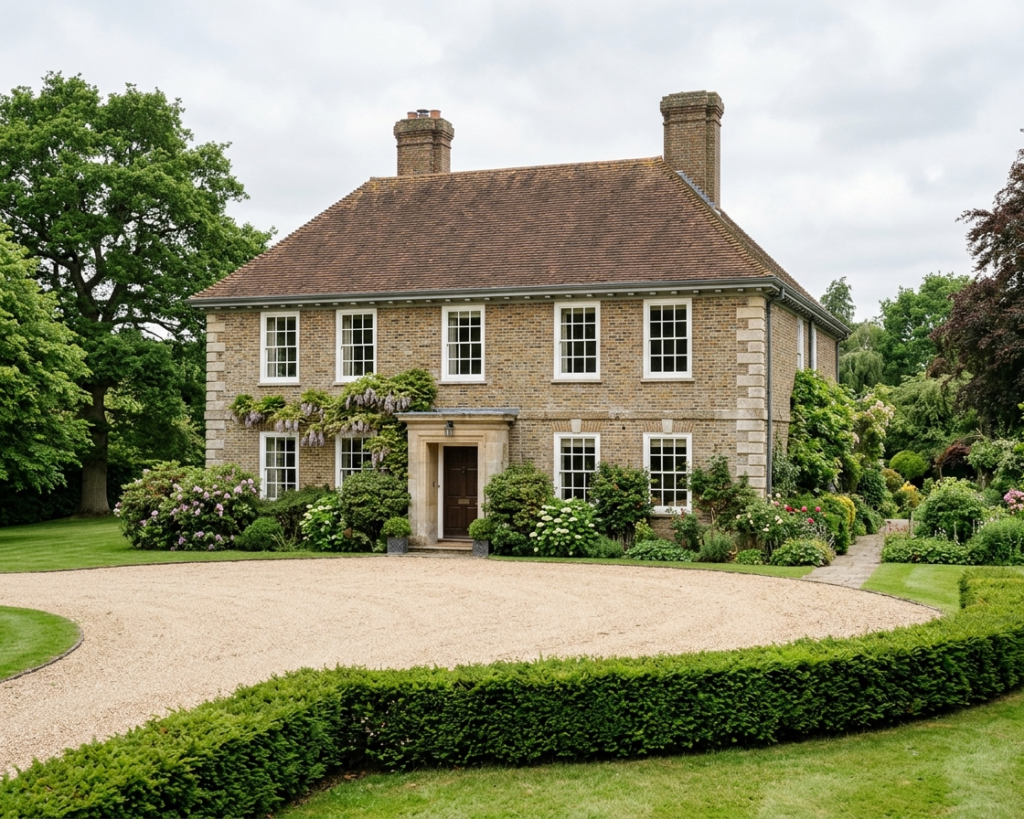
Some of the most desirable properties in Cobham sit on the village’s woodland edges, Halfpence Lane backing onto Cobham Wood, the houses near Ashenbank, the properties bordering Jeskyns Country Park and the Darnley Mausoleum grounds. These addresses come with the trade-off of beautiful surroundings against more complicated access for service vehicles.
The lanes around the woodland edges are narrow, often single-track with passing places, and have low-hanging tree canopy in places where the woodland comes close to the road. A 7.5-tonne Luton van isn’t always the right vehicle. For these properties we usually run the move with a 3.5-tonne Luton plus a shuttle if the volume requires it, or with two 3.5-tonne vans operating in tandem. The total carrying capacity is similar, but the smaller vans navigate the lanes without snapping branches or scuffing dry-stone walls.
Properties facing the country parks or the Mausoleum grounds also tend to have longer driveways, often gravelled, with the actual house set 30 to 100 metres back from the lane. We can’t simply park at the kerb and carry, we drive the van as close to the house as the driveway will safely take, which sometimes means making the trip up and down the drive several times rather than one continuous walk-in walk-out. Day rates absorb this, but it’s worth flagging in advance so the time estimate is honest.
These edge-of-woodland Cobham moves are some of the most pleasant moving days we do. The crew arrives at a 16th or 17th century house at the edge of a thousand-year-old wood, the property has been carefully kept, and the customer is usually unhurried and welcoming. They take longer than urban moves but they don’t feel like work in the same way.
Cobham-Specific FAQs
Cobham has no railway station. Does that affect how the move works?
Not the loading itself, Cobham moves are car-only at both ends anyway, so the absence of a station is irrelevant to the actual job. Where it matters is the customer profile. Cobham residents are car-dependent, which usually means two or three cars per household, larger garages, more outdoor equipment, more bikes, more general ‘stuff’ that lives in the garage. We factor that into the volume estimate at quoting.
Can your van reach properties on Halfpence Lane and the country park edges?
Yes, but we send the right vehicle. Properties along the woodland-edge lanes get a 3.5-tonne Luton or two 3.5-tonne vans rather than a single 7.5-tonne, because the lanes have low canopy and tight passing places. We work out which vehicle is right when we quote, usually from the postcode and a quick description of the property’s approach. If you can send a photo of the lane in front of the house, that helps.
My house was built in the 1700s. Will your crew know how to handle it?
Yes. Cobham has several Grade II listed and pre-1800 properties, and we do them carefully. Floor runners on every original boarded or flagstone floor, no wheeled trolleys on heritage surfaces, all carrying rather than dragging, and full furniture-protection blankets on any piece moving through period doorways and corridors. We measure doorways and route widths before lifting anything because period properties often have unexpectedly narrow points.
Are weekend moves more expensive in Cobham?
Saturdays no, Sundays yes. Cobham move volumes don’t change much by day of the week, the village is residential rather than commuter, so weekday and Saturday loading happens at the same pace. Sundays are slightly more expensive because we run lighter crew on Sundays generally. Bank holidays are at the Saturday rate. The bigger consideration for Cobham customers is usually weather, substantial-house moves with outdoor possessions are easier in dry months, so spring through early autumn bookings tend to run smoother than mid-winter.
Moving In or Out of Cobham?
Send us your postcode, a quick description of the property, and a rough sense of the volume. We’ll come back with a considered quote that reflects the realistic time the move will take. Usually within an hour on weekdays.