
Removals in Crayford, Kent
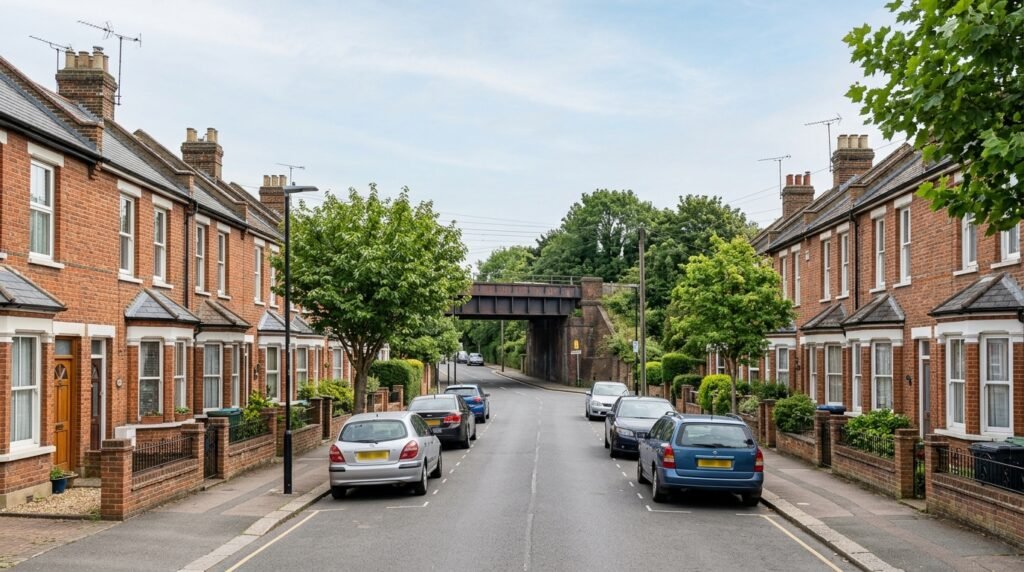
Crayford is the town that sits in London Borough of Bexley but writes Dartford on its postal address. A proper mainline station with direct trains to London. Tower Retail Park five minutes away. Period terraces on Bexley Lane, modern apartments around the station, family homes on the quieter streets toward Barnehurst. We cover all of DA1 3 and DA1 4, every street, every property type.
A London Borough With a Kent Address
Crayford has one of the more confusing administrative setups in our patch. Geographically it sits in the London Borough of Bexley, that’s the council you pay your council tax to, the council that handles planning permission for your house, the council that arranges your bin collections. Your MP represents Bexleyheath and Crayford constituency. The local police force is the Metropolitan Police (Bexley division). All of that puts Crayford firmly in London.
But the postal address tells a different story. Royal Mail’s sorting system uses ‘Dartford’ as the post town for all DA1 addresses, including the Crayford ones. So a letter addressed to a property on Crayford High Street officially reads ‘Crayford, Dartford, DA1 4…’, even though Dartford itself is a different borough miles away. The postcode prefix DA stands for Dartford, which is where the confusion originally came from.
In practical terms for a removal job, this matters in two small ways. First, council tax band lookups and any parking permit applications go through Bexley Council, not Dartford Borough Council, easy mistake to make if you’re new to the area. Second, address forms sometimes auto-populate Dartford when you’d expect Bexley, which can confuse delivery services and insurance providers. Neither affects the move itself but they’re worth knowing.
Crayford is part of our wider Dartford coverage area. If you’d like to see how we handle the rest of the patch, the parent page covers it.
The Station-Led Character
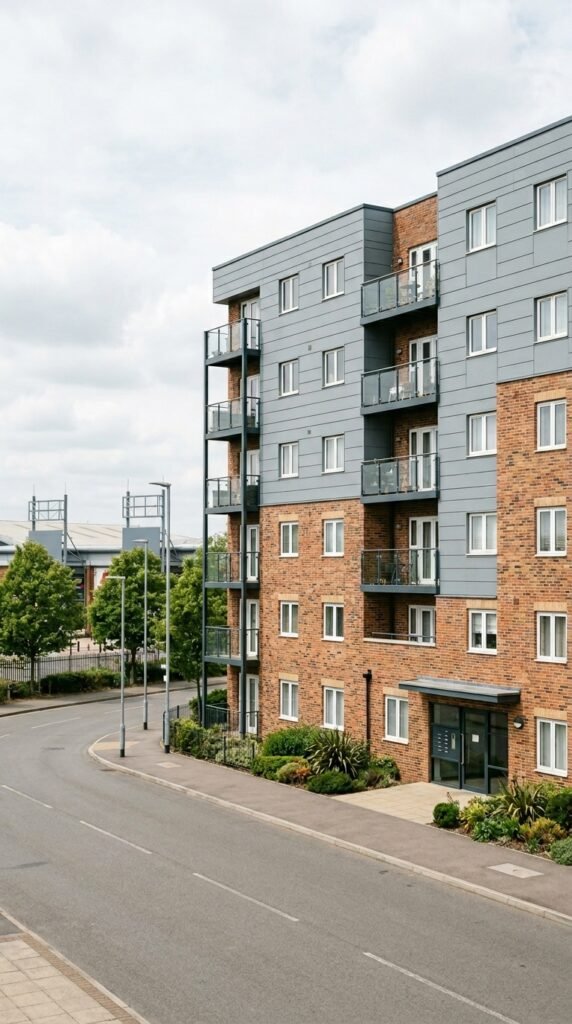
Crayford’s identity is shaped by what’s around its station more than by anything else. Crayford Station sits on Station Road with direct Southeastern services to London, Charing Cross, Cannon Street, and London Bridge during peak hours, making it one of the most accessible commuter stations in our wider Dartford patch. Tower Retail Park (with Boots, Currys, Next, Homebase, and Sainsbury’s) is a short walk from the station. The Acorn Industrial Park nearby provides local employment. The result is a town that’s busier than its size suggests, with a wider range of property types than a typical commuter village.
Modern apartments
One and two-bedroom apartments in the modern blocks around the station, on Crayford Way, and in the recent developments along Station Road and Lower Station Road. Popular with first-time buyers, young professionals, and rental investors. Volumes are small. Most of these are man-and-van scale or short half-day jobs.
Standard terraces and semis
Two and three-bedroom Victorian and Edwardian terraces on Whitehill Road, Beaconsfield Road, Baldwyns Road, Stour Road, Manor Road, and the surrounding streets. Some have small front gardens, others come straight off the pavement. Average prices sit around £330-400K depending on the specific postcode. These are the bulk of Crayford bookings, typical two-person crew, half-day to full-day depending on the property size and occupation history.
Larger family homes
Three to five-bedroom semi-detached and detached houses on the quieter streets, Iron Mill Lane, parts of Bexley Lane, the streets up toward Barnehurst. Properties on Heath Road and Heathlee Road can run higher. Often occupied 10-20 years by current owners, so move volumes are substantial. Full-day jobs with three crew.
The Older Crayford: Bexley Lane and the High Street
Beyond the station and retail park sits the historic core of Crayford. The High Street still has its pre-war shopfronts in places. Bexley Lane runs along the line of an old road that pre-dates most of the surrounding development, with several Grade II listed properties along its length. The River Cray and Crayford Creek give the town its name and shape some of the older street layouts. This is where Crayford’s history lives, and where the careful handling we apply across Cobham, Shorne, and Wilmington’s period properties is relevant.
Grade II listed terraces on Bexley Lane are some of the oldest properties in our Dartford patch, period features include original sash windows, exposed beams in some upper floors, narrow stairs that turn at the top, and low doorways that catch standard king-size mattresses. We treat these as heritage moves: floor runners on every original floor, carry rather than wheel through tight corridors, dismantle anything that won’t fit through the original door widths. The customer profile for these properties tends toward longer-occupation residents who’ve valued the period character for years, when they do move, they often have decades of possessions to handle.
Properties along the older sections of London Road and Crayford High Street include some that retain Victorian or Edwardian shopfronts on the ground floor (now residential) with flats above. These can have unusual layouts, narrow front entrances, internal stairs that climb past ground-floor commercial spaces, fragmented floor plans from historic conversions. We measure access carefully before move day on these because what looks like a standard two-bedroom flat from outside can have routes that mean nothing fits through the original entrance, sometimes we use the rear access or upper window for larger items.
The streets between the older core and the station, Maiden Lane, Manor Road, Old Road, sit in the middle ground. Mostly Victorian and Edwardian terraces, mostly standard widths, but with the occasional period quirk worth knowing about in advance. Our crew has done enough of these to recognise the patterns and plan accordingly.
Crayford-Specific FAQs
Is Crayford in London or Kent?
Both, depending on how you measure it. Crayford is in the London Borough of Bexley for council, planning, MP, and police purposes, so technically it’s part of Greater London. But the postal address officially places it in ‘Dartford’ as the post town. Most local residents describe themselves as living in Kent because the character and accent of the area feels Kentish rather than Londonish, but the council tax bill comes from Bexley. For removal purposes we treat it as part of our Dartford patch, since that’s how the postal logic and our practical coverage line up.
Can your van park near Crayford Station during peak commuter hours?
Yes, but with timing planning. The streets immediately around Crayford Station, particularly Station Road, Lower Station Road, and the connecting roads to the High Street, get tight during 7:30am-9:30am and 5:00pm-7:00pm because residents compete for parking with rail commuters. We schedule station-area moves to start either before 7:00am (commuters not yet arrived) or after 10:00am (rush hour over). The retail park traffic on Saturdays can also affect the surrounding streets, we plan around it.
My Bexley Lane property is Grade II listed. Will the move take longer?
Yes, and we factor it in. Grade II listed properties on Bexley Lane have low doorways (some under 6 feet, which won’t take a standard king-size mattress without dismantling), exposed beams in upper rooms, original boarded or flagstone floors, and tight stairs. We use floor runners on every original floor, carry rather than wheel through period spaces, and dismantle furniture that won’t pass through the original doorways. A move that would be a half-day in a modern equivalent is usually a full day in a listed Bexley Lane property. We build that time into the quote upfront so the day runs smoothly.
Crayford is near the River Cray. Should I worry about flood risk for my move date?
Almost never. The River Cray and Crayford Creek do pose flood risk to a small number of streets in the lowest-lying parts of the town, generally the streets immediately along the river itself, mostly the industrial side around Acorn Industrial Park rather than residential streets. The Environment Agency rates the residential parts of Crayford as ‘very low’ flood risk. Our move days are weather-dependent only in the most extreme conditions (heavy snow, named storms with flood warnings) which would affect any move anywhere. If you’re in one of the genuinely riverside properties, your solicitor’s environmental searches will have already flagged this, and it doesn’t change our move logistics.
Moving In or Out of Crayford?
Send us your postcode, the property type, and a quick note on which side of Crayford you’re in, near the station, the older streets around Bexley Lane, or one of the quieter residential pockets. We’ll come back with a quote within an hour during working hours.