
Removals in Shorne, Kent
Shorne is the one. The conservation village south of Gravesend with houses dating back to the 1500s, Grade II listed properties at every turn, and the sort of period features that need real care during a move. We’ve done plenty of removals here, and we don’t treat them like ordinary jobs.
A Conservation Village, and What That Means
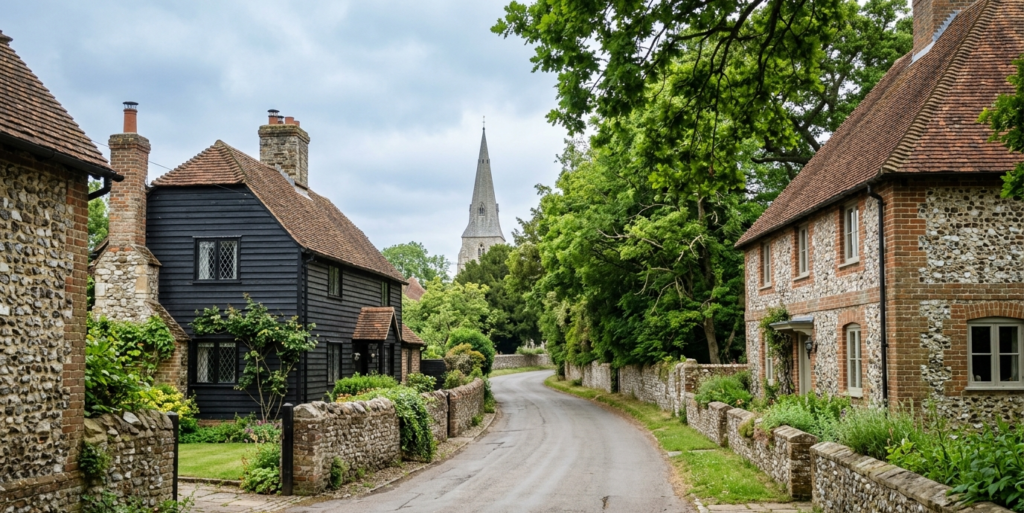
Shorne has been designated a Conservation Area since the 1970s. In planning terms, that means stricter controls on alterations, extensions, and exterior changes. In practical terms for a removal job, it means three things. First, the architecture you’re moving in and out of has genuine age, many of the houses around The Street and Church Lane go back 200 or 300 years, with the oldest dating to the 1500s. Second, the streetscape itself is protected, narrow lanes, mature trees, low boundary walls, all of which limit how a removal van can approach the property. Third, the type of customer moving in Shorne tends to be moving high-value contents, often including antiques, fine art, and original period pieces that aren’t replaceable.
Most removal firms know how to load a Luton van. Not all of them know how to walk a 17th-century oak refectory table out through a 1530 doorway without scuffing the original lintel. That distinction matters here in a way it doesn’t in newer developments.
Shorne is part of our wider Gravesend coverage area. If you’d like to see how we handle the rest of the patch, the parent page covers it.
Moving In and Out of Listed Properties
Roughly a third of the Shorne moves we handle involve a listed property at one end or the other. Listed buildings need handling that ordinary moves don’t, and the difference between a careful firm and a careless one shows up in the detail.
Protecting original floors
Most listed Shorne properties have original boards, flagstones, or quarry tiles. A wheeled trolley running across an original elm boarded floor will scuff it within a single move. We don’t use trolleys on heritage floors. Instead, we use floor runners (long protective fabric strips laid down before any heavy work starts) and we carry rather than wheel anything substantial. It’s slower, but slower is the right speed for this.
Doorways, lintels, and beams
Period doorways in the oldest Shorne properties can be 6 feet high or less. A standard king-size mattress is 6 foot 6. Doorways often have low oak lintels that won’t take a knock without splitting. Our crew measures every doorway and route before lifting anything, dismantles anything that won’t pass through, and pads anything still oversized. We’ve never split a Shorne lintel and we’d like to keep it that way.
Wall protection on tight corridor turns
Old houses have walls made of lath and plaster, sometimes over wattle-and-daub. A bump from a wardrobe edge doesn’t just leave a scuff — it can crack the plaster. We use furniture protection blankets on every piece moving through a listed building, including the corners and edges that would normally be exposed. For the tightest corridors, we also add wall protection on the corners themselves.
Shorne Without a Station
Shorne doesn’t have its own railway station. The nearest is Higham, about 2 miles away, but Higham’s parking is mostly used by Higham’s own commuters, so Shorne residents who commute by rail mostly drive to Strood or Rochester. This single fact shapes a lot about Shorne — who moves here, how they move, and where they tend to move to.
The practical implication for a removal: Shorne moves are car-only journeys at both ends. People moving into Shorne are arriving from somewhere they’d been driving from anyway. People leaving Shorne are usually heading further into Kent (Sevenoaks, Tonbridge, Maidstone) or further from London (the coast, the South Downs), not back into the city. A typical Shorne move covers a longer distance than a typical Higham or Northfleet move.
This affects pricing structure slightly. Our standard hourly model covers short local moves well, but longer-distance Shorne moves are often quoted as flat-rate full-day or two-day bookings rather than hourly. The transparent fact is that a Shorne-to-Sevenoaks move involves about 45 minutes of motorway driving each way, and quoting it hourly would either short-change us or feel padded to the customer. Flat-rate is cleaner for both sides.
The Three Tiers of Shorne Property
Shorne property splits into three clear tiers, each with its own move profile. The price range across these tiers is wide, from around £385,000 at the entry end to £2.75 million at the top, and the moving complexity scales accordingly.
Entry tier (£350,000 to £500,000): The Street, Walmers Avenue, Racefield Close
Three-bedroom semi-detached and terraced houses, mostly post-war or 1960s-1970s builds, in the closer-to-the-A2 parts of the village. Straightforward access, modern doorway widths, reasonable parking. These moves are quoted similarly to a standard Gravesend or Northfleet move, half-day to full-day for a two-person crew. They make up about 40 percent of our Shorne bookings.
Mid tier (£500,000 to £1 million): Bowesden Lane, Old Watling Street, Lower Shorne newer detached
Four and five-bedroom detached houses on larger plots, mostly built between the 1980s and 2010s, often with double garages and extensive gardens. Higher volume than entry tier, longer crew time needed (usually a full day with three or four crew), but logistically standard. These properties don’t have listing constraints, so loading and protection requirements are normal.
Premium tier (£1 million plus): Pear Tree Lane, Thong Lane, The Street period houses, Shorne Ridgeway
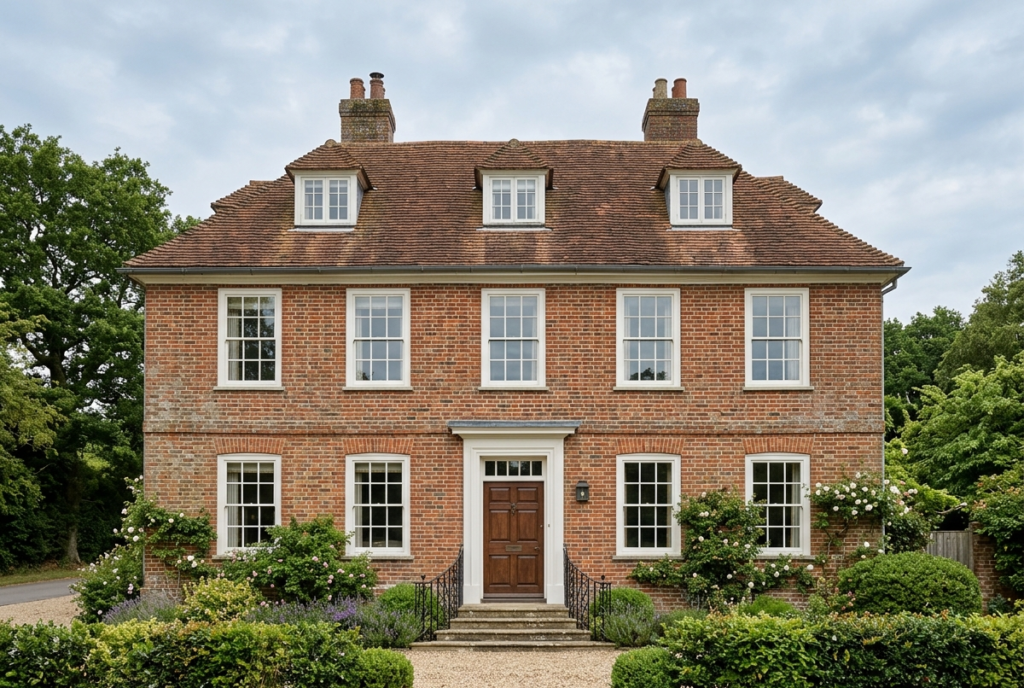
Substantial period detached, Grade II listed, and equestrian properties on multi-acre plots. The £1 million-to-£2.75 million range. These are full-day-plus bookings, sometimes two-day moves, with a four-person crew, full heritage-grade protection, and detailed pre-move planning. Insurance level on the move is increased to reflect higher-value contents. We don’t take many of these, three or four a year, but they’re the moves where our preparation is most obviously valuable.
Shorne-Specific FAQs
Do conservation area rules affect what I can do with a removal van?
Indirectly, yes. The Conservation Area designation protects the street and building character, which means in some parts of the village (the older streets around The Street and Church Lane) you can’t park a 7.5-tonne Luton on the pavement, you can’t run heavy equipment across protected verges, and you should avoid leaving the van running for extended periods. None of this stops a removal, it just shapes the planning. We know the streets well enough to handle it without making it a customer-facing issue.
Some streets back onto Shorne Country Park. Does that affect access?
Yes, for a few specific properties. Pear Tree Lane, Thong Lane, and some of the Lower Shorne lanes have property back gardens that border the country park, and the lanes themselves are narrower than the village core because they were never widened for traffic. We send 3.5-tonne vans rather than 7.5-tonne Lutons to these properties as a default, and shuttle to a main van parked nearer the village if the load exceeds what one smaller van can take in a single trip.
Do you cover Lower Shorne and Shorne Ridgeway, or just the village core?
All of it. Lower Shorne (the lanes between The Street and the A226), Shorne Ridgeway (the lanes climbing south toward the North Downs), and the central village around the church and the Inn on the Lake are all part of our standard Shorne coverage. DA12 7 and DA12 3 postcodes are both included.
How far in advance should I book a Shorne move?
Earlier than urban moves. Premium-tier Shorne moves typically book 8 to 12 weeks ahead because the crew, the van, and the heritage-protection equipment all need to be reserved together. Entry-tier moves can usually be booked 3 to 4 weeks ahead. The villages-to-villages summer pattern means May to September is the busiest period for us in Shorne, autumn and winter Shorne moves have more flexible availability.
Planning a Move in Shorne?
Send us your postcode and a brief note on the property, listed, period, modern, the size, the access, and we’ll come back with a considered quote. Usually within an hour on weekdays.