
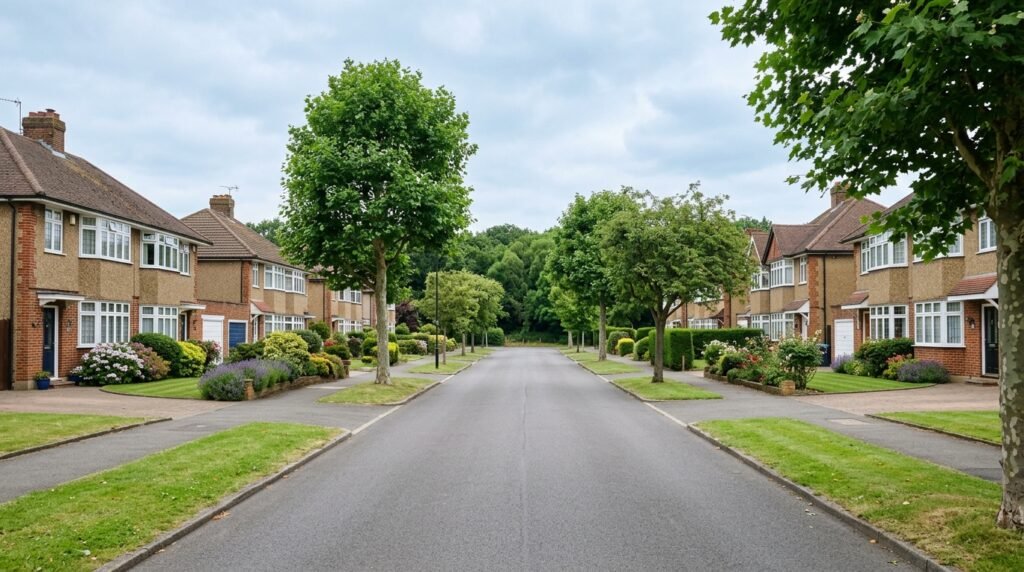
Removals in Selsdon, South Croydon
Selsdon is the Croydon suburb without a railway station of its own. The nearest mainline station is Sanderstead, 2.2 miles up the road. The result is one of the quietest residential pockets in the borough, with established family homes, mature gardens, and the kind of village character that’s increasingly rare within Greater London. Selsdon Wood sits on the southern edge. The Addington Hills are close. Semi-detached houses dominate, prices from £450K modest semis to £1.2M substantial period family homes. We handle moves across the whole patch.
A Croydon Suburb Without a Station
Selsdon is unusual among the Croydon sub-areas because it has no railway station of its own. Most Croydon suburbs have either a mainline station, a Tramlink stop, or both within walking distance. Selsdon has neither. The nearest mainline station is Sanderstead, 2.2 miles to the west on the line through Purley to London Bridge and Victoria. East Croydon Station, the borough’s main transport hub, is around 4 miles north.
In practice, Selsdon residents either drive to a station for daily commuting (Sanderstead Station car park or East Croydon multi-storey parking) or use the substantial bus service that connects Selsdon into the wider Croydon network. Multiple TfL bus routes run through the village core, with services to East Croydon, Sanderstead, Croham, and the surrounding areas. Bus journey times to East Croydon are typically 20-30 minutes depending on traffic and the specific route. Many residents combine the bus to East Croydon with mainline rail from there for London-bound trips.
This no-station character shapes the suburb in three specific ways. First, the residential streets have lower commuter footfall than station-adjacent areas, making them quieter throughout the day. Second, parking pressure is much lower than in tram-served or station-adjacent suburbs, so move-day vehicle access is generally easier. Third, the customer profile leans toward established families and senior professionals who specifically chose Selsdon for the quieter character, rather than commuter professionals who prioritise transport access.
Selsdon is part of our wider Croydon coverage area. If you’d like to see how we handle the rest of the borough, the parent page covers it.
Semi-Detached Country: Property Tiers in Selsdon
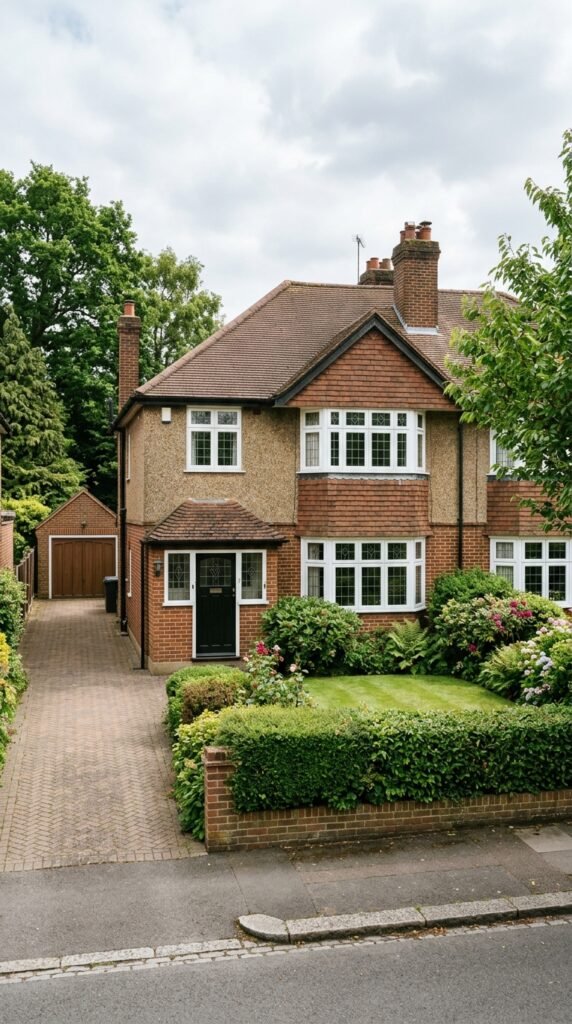
Selsdon’s housing stock is dominated by semi-detached houses to a degree that’s unusual even for a London suburb. The most common type of housing on the streets immediately surrounding Selsdon Park Road, Upper Selsdon Road, Selsdon Avenue, and the village core is semi-detached. Outright ownership (no mortgage) is well above the national average, signalling established, longer-occupation residents rather than mortgage-cycle first-time buyers. Three distinct property tiers operate.
Entry tier: smaller semis and terraced houses
Three-bedroom semi-detached houses on the more modest residential streets, mid-terrace houses on Selsdon Road and the connecting roads, and some maisonettes in the period conversion buildings. Standard family ownership patterns. Move logistics are typical of three-bedroom family homes. Full-day jobs with three crew.
Standard family semis
Four-bedroom semi-detached houses across the Selsdon residential streets, often substantially extended over the decades with loft conversions, side extensions, and kitchen-diner rear extensions. Long-occupation patterns of 15-25 years are typical for this tier. The substantial possessions that come with two decades in a family home produce 3-4 Luton-load move volumes. Full-day jobs with three or four crew.
Substantial detached and period family homes
Larger 5 and 6-bedroom detached and semi-detached family homes on the more desirable Selsdon streets, including substantial period properties with mature gardens, garage and driveway parking, and the kind of long ownership patterns that produce premium-tier move volumes. Some have been substantially extended; some retain original period features. Move profiles similar to substantial Sanderstead or Coulsdon moves, full-day-plus, three or four-person crew, often with returning morning for outbuildings.
The Woodland Edge and Addington Hills Lifestyle
Two pieces of green infrastructure define the Selsdon lifestyle and shape the property market. The first is Selsdon Wood, substantial woodland directly on the southern edge of the suburb, managed by the National Trust and open for walking access. The second is the Addington Hills, substantial heath and woodland a short distance to the east, with one of the highest points in Greater London providing panoramic views back toward central London. Together they give Selsdon a green character that the wider Croydon borough only matches in pockets.
Woodland-edge properties
Selsdon properties immediately adjacent to Selsdon Wood (on the southern boundary streets, with rear gardens that back onto the woodland) carry premium values and a specific move-day logistics pattern we’ve seen across our patch. The rear of the property is unreachable for the van, the woodland boundary is solid (typically substantial perimeter hedging or fencing). All loading goes through the front door and around the side of the house if there’s side access. Some woodland-edge lanes are narrower than the central Selsdon streets, and we sometimes send a 3.5-tonne short-wheelbase Luton rather than the 7.5-tonne. Same total capacity for a typical residential move, just better suited to the lanes.
The Addington Hills connection
The Addington Hills to the east are accessible by foot or short car drive from most of Selsdon. The hills include open heathland, mature woodland, and walking trails connecting through to New Addington and the wider patch. For move purposes, the hills are too far to affect logistics, but they do affect property values on the Selsdon side of the boundary where ‘access to the Addington Hills’ is a common estate-agent selling point. Properties on the easternmost Selsdon streets carry small premiums for this proximity.
The established family ownership cycle
Selsdon’s ownership profile (outright ownership above the national average, family demographic, long occupation patterns) produces a specific move pattern. The dominant inbound move is families upsizing from inner-Croydon or inner-London flats into a Selsdon semi as their first family-home purchase. The dominant outbound move is families downsizing 20-25 years later, after children have left home, into a smaller property within Selsdon, into Sanderstead or Purley, or sometimes into Surrey or Sussex for retirement. Within-Selsdon moves account for around 20% of our local bookings, with families upsizing within the suburb as their family grows.
Selsdon-Specific FAQs
Selsdon has no station. Does that affect move-day logistics?
Actually, it makes them easier. The lack of a station in Selsdon means none of the commuter parking pressure that affects station-adjacent Croydon suburbs (Purley, Coulsdon, Addiscombe). The residential streets have lower foot traffic throughout the day, and we can typically schedule loading at any time without working around commuter peaks. Move-day vehicle access is generally easier in Selsdon than in most other Croydon sub-areas. The only consideration is that we work with the bus routes that pass through the village core, if your street is on one of the main bus corridors, we’re aware of the bus timing and plan loading to minimise any disruption to bus services.
My Selsdon property backs onto Selsdon Wood. Does that change the move?
Slightly. Selsdon Wood-adjacent properties have the same characteristics as other woodland-adjacent properties in our patch. The rear of the property is unreachable for the van (the woodland boundary is solid), so all loading goes through the front door and around the side if there’s side access. Lanes immediately adjacent to the woodland boundary can be narrower than the standard Selsdon streets, and we sometimes send a 3.5-tonne short-wheelbase Luton instead of the 7.5-tonne. Same total capacity for a typical residential move, just better suited to the lanes. We assess on the specific property when quoting.
How does the Sanderstead Station distance affect Selsdon moves?
It doesn’t directly, but it does affect the customer demographic. Selsdon families who use Sanderstead Station for daily commuting either drive (and park in the station area) or take a 30-40 minute walk if they’re at the closer end of Selsdon. Many Selsdon families use the bus service to East Croydon Station instead, with onward rail from East Croydon to central London. For a move, the Sanderstead Station distance affects nothing, we don’t need to access the station for the loading or unloading of your move. The 2.2-mile distance to Sanderstead Station is simply a feature of Selsdon’s character (the suburb’s identity is built around being a quieter, station-free pocket) rather than a logistics consideration.
Many Selsdon homes are owned outright after long occupation. What does that mean for the move?
It typically means more accumulated possessions and longer move days. A family that has owned a Selsdon property for 20-25 years (and Selsdon has a high proportion of these) produces substantially more move volume than a property occupied for 5-10 years. We see this in practice: standard 4-bedroom Selsdon family homes commonly produce 3-4 Luton-load moves, with significant garden equipment, outbuilding contents, and family heirlooms. We strongly recommend packing services for these moves, often with the customer keeping clothing and books to pack themselves but asking us to handle everything else.
Moving In or Out of Selsdon?
Send us your postcode, the property type, and how long you’ve been there. Long ownership often means more volume than the property type alone suggests. We’ll come back with a quote that accounts for the realistic time needed. Usually within an hour during working hours.