
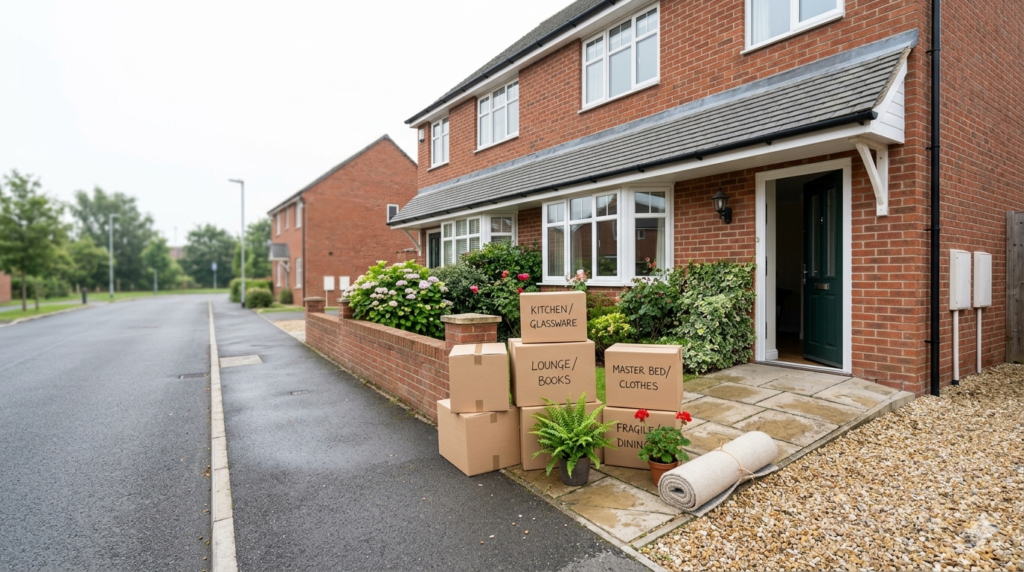
House Removals, Done Properly
Moving house is one of the most stressful days most people ever plan. It shouldn’t be. Hadley’s handles full house removals across Kent and South East London, and this page walks you through exactly what happens from the moment our crew arrives at your door.
What a House Move With Us Looks Like
A full house removal is three distinct stages, and knowing what happens at each one removes most of the anxiety. We plan and run every job the same way, whether it’s a studio flat or a five-bedroom house, because the process works.
Before the Day
When you book, we talk through the key details. Property sizes at both ends. Access at both ends. Parking. Lift availability. Anything oversized or delicate. Stairs. Pets. If anything looks tight, we suggest solutions before it becomes a problem on the day. You get a written quote with a single total price, broken down so you can see what you’re paying for.
Moving Day
The crew arrives at the time agreed, in branded vans, in uniform. They introduce themselves. They walk through the property with you to confirm what’s going and what isn’t. Then they work, and you can either stay involved or get out of the way and let them get on with it. Either is fine. Most moves finish within one working day.
After the Unload
Once everything is in the new property, we go through it with you. Furniture in the rooms you want. Beds reassembled if we took them apart. Boxes in the right rooms. We don’t leave until you’ve confirmed you’re happy. If anything needs adjusting, we do it there and then.
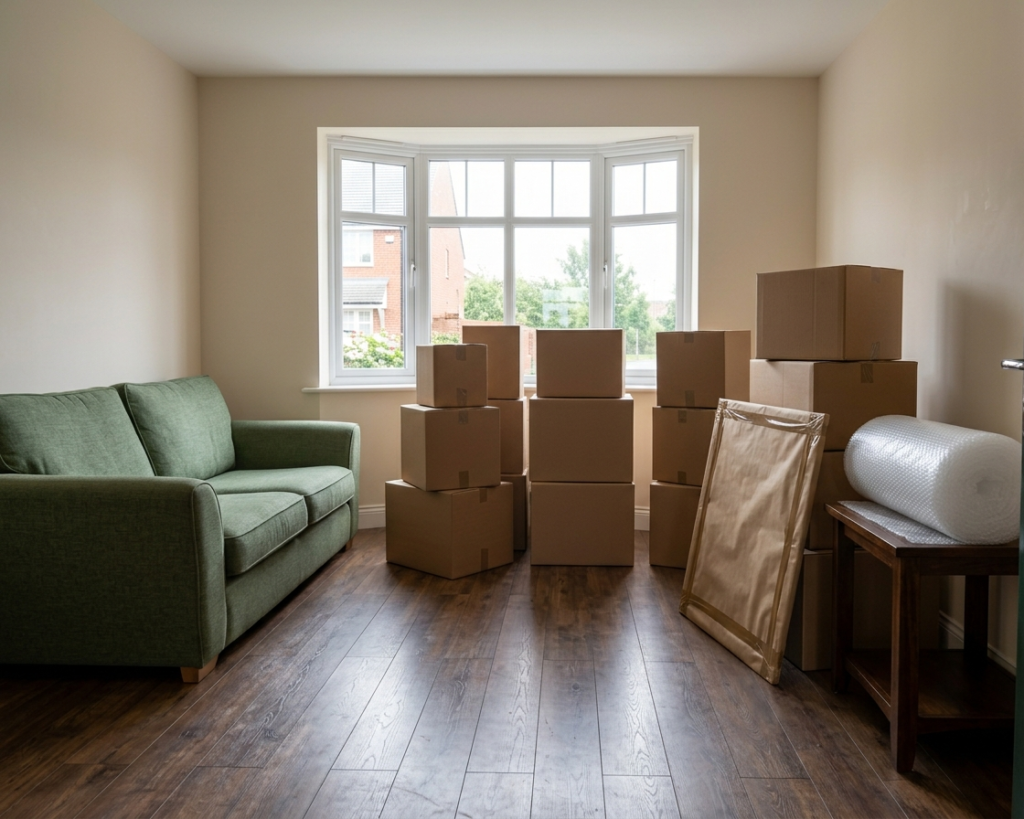
The Morning of Your Move
The crew usually arrives between 8 and 9am, though we’ll agree an exact time with you when we book. The lead mover introduces the team and asks you to confirm what’s being moved and what’s staying. This walk-through takes about ten minutes and it’s genuinely useful. It stops the crew accidentally loading the chest of drawers you’d decided to leave for the buyer, and it flags anything you’d forgotten to mention.
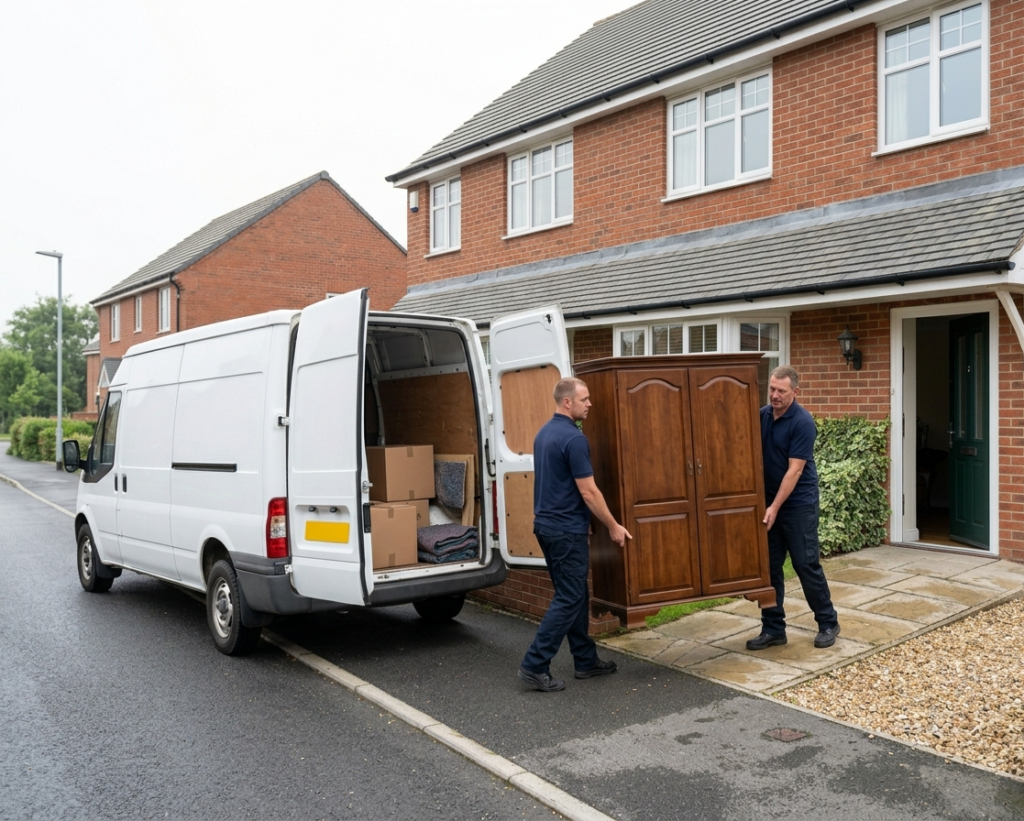
Loading follows a plan. Heavy, square items go in first and form the structural base of the load. Anything fragile goes on top, wrapped in blankets or bubble wrap so nothing touches anything else in transit. Boxes get strapped in so they can’t shift when the van goes round a corner. Wardrobes and sofas are covered before they leave the house so they don’t pick up marks on the way out the door.
If you’ve asked us to dismantle anything, that happens now. Bed frames usually come apart. Wardrobes sometimes do. Dining tables with extending mechanisms almost always do. The crew carries the tools and logs which screws go with which piece of furniture so nothing gets lost in transit.
When the van is loaded, the crew checks the property one final time. Behind doors, inside cupboards, up in lofts if relevant. It’s surprising how often a single mug or a pair of shoes ends up left behind. Then the van is locked and we’re ready to drive.
Unloading and Settling In
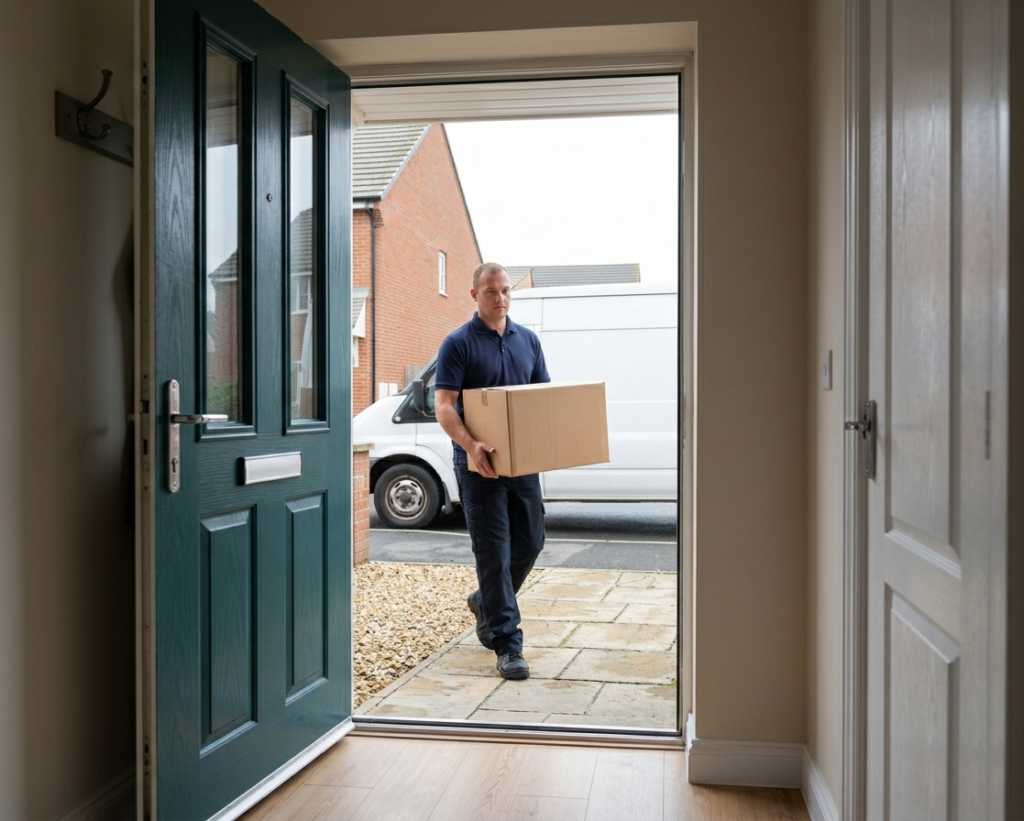
Arriving at the new property is when the plan either works or it doesn’t. We make it work. The crew takes a minute to look at access, agrees with you where the van will park, and checks which rooms things are going in. If you’ve labelled boxes by room, unloading is fast. If you haven’t, we’ll ask as each box comes in.
Large furniture gets placed where you actually want it, not just dropped in the hallway. If you’re not sure where the sofa should sit, try a position. If it doesn’t feel right, we’ll move it. This is the last chance to get the layout right without the hassle of rearranging it yourself later.
Anything that was dismantled gets reassembled. Beds get put back together so you can sleep in them tonight. Wardrobes go back up so clothes have somewhere to hang. The crew doesn’t leave until the pieces that need to work, work.
Before we drive off, the lead mover walks through the house with you one final time. Nothing damaged. Nothing in the wrong place. Everything you expected to arrive has arrived. If you spot anything that needs addressing, we sort it then, not later.
What Affects the Price of a House Move
Every house move is priced individually because every move is different. When we quote you, we’re factoring in five things. Understanding them helps you understand your quote, and it helps you get a cheaper quote if any of them can be adjusted.
Volume
How much stuff is actually going. A two-bed flat with minimal furniture takes less time than a two-bed house with an attic full of storage. We estimate volume in cubic feet, which sounds clinical but in practice just means ‘how many vans and crew members does this need’.
Distance
A move within Gravesend costs less than a move from Gravesend to Watford. Not because we charge per mile as a line item, but because crew time and fuel costs both scale with distance. Longer distances also sometimes mean we need to allow for traffic in the quote.
Access at Both Ends
This is the factor most people underestimate. Ground-floor flat to ground-floor flat is the fastest kind of move. Top-floor flat without a lift to another top-floor flat without a lift can take two or three times as long. Narrow roads that can’t fit a Luton van, no parking within 30 metres of the front door, council permit requirements, all of this goes into the quote.
Timing
Weekdays are cheaper than weekends. Mid-month is cheaper than the last Friday of the month. If your dates are flexible, telling us so at the quote stage usually saves money. If they’re not flexible, that’s fine too, we’ll quote the date you need.
Extras
Packing, unpacking, dismantling, reassembly, specialist items like pianos or hot tubs, storage between moves. Each of these is optional. You can take all of them, some of them, or none. The quote breaks them down so you can remove anything you’d rather handle yourself.
Moving Day FAQs
What time will you actually arrive?
We book an arrival window, usually an hour wide. For a move starting at 8am, we’ll aim to be on site between 7:45 and 8:15. Traffic or an earlier job overrunning can shift this, but we call if we’re going to be outside the window. We don’t do the ‘we’ll be with you sometime between 8 and 5’ thing.
What should I have ready before you arrive?
Boxes packed and labelled with the room they’re going to. Wardrobes emptied unless we’re moving them packed. Fridges and freezers defrosted at least 24 hours before. Anything you’re taking in your own car kept separate and clearly marked ‘do not load’. A kettle and mugs accessible, because the crew runs on tea.
Where do we go with the pets and kids on the day?
Wherever they won’t be underfoot, ideally. Pets often do best at a friend’s house or in one closed-off room with food, water, and their carrier ready for when we’re finished loading. Small children the same. Moving day is not the day to have a three-year-old ‘helping’ the crew carry boxes down the stairs.
What happens if the move takes longer than estimated?
If the delay is because of something we didn’t know about when we quoted (three times more stuff than described, a lift out of order, a contested handover causing a two-hour wait for keys), we’ll discuss it with you before extra charges apply. If it’s just taking a bit longer than expected within reason, that’s on us, not you.
What if something gets damaged?
Tell the crew before they leave so we can log it. Every move we do is covered by goods-in-transit insurance. For anything significant we take photos at collection and delivery, and we have a claims process that’s designed to actually pay out rather than dodge. Minor scuffs on old furniture happen occasionally on any move, which is why we wrap everything in blankets to make it rare.
Ready to Talk About Your Move?
Fill in a quote request or give us a ring and we’ll put together a price based on your actual move, not a ballpark. Most quotes back within two hours.