
Removals in Welling, South East London
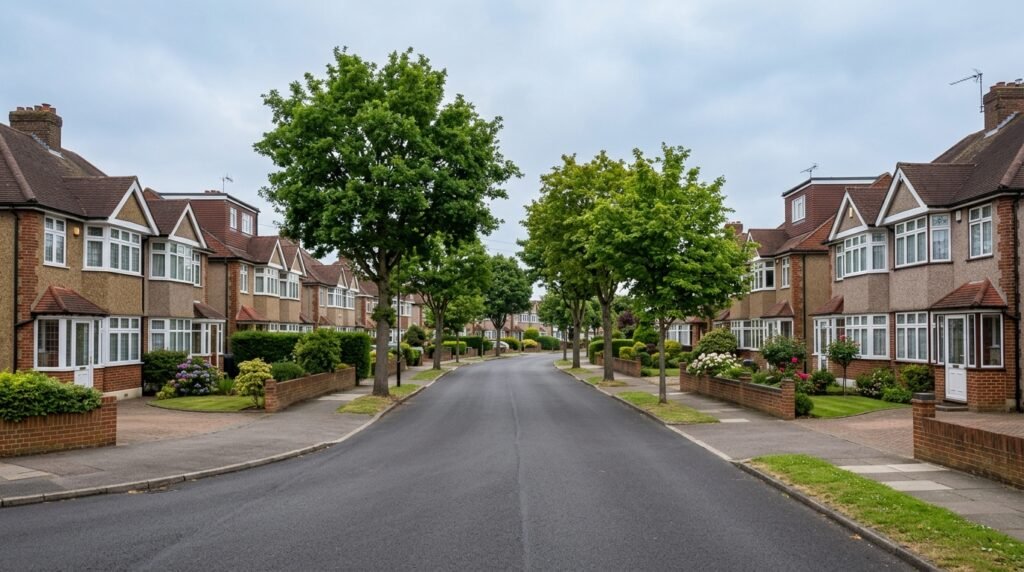
Welling is one of the busiest family-home markets in the Bexley borough, a settled DA16 town where homes turn over steadily and people tend to stay. It folds in three neighbourhoods: Welling proper with its High Street, Falconwood on the greener western edge, and East Wickham to the north. The housing is mostly 1930s semis and terraces, many converted upward into the loft for an extra bedroom. Welling and Falconwood stations both reach Cannon Street and Charing Cross. We handle moves across the whole DA16 patch.
One of the Borough’s Busiest Markets
Welling is one of the most consistently active property markets in the Bexley borough, and the reason is its settled, dependable, family-and-commuter character. It is not a flashy area, and that is rather the point. The High Street has the everyday shops, banks, and services people actually use. The housing is solid 1930s family stock. The transport works. And so homes turn over at a steady, reliable rate, with families both wanting to move in and tending to put down roots once they arrive.
The town’s appeal rests on a combination of practical strengths. Welling Station sits on the Bexleyheath line with direct services to London Cannon Street and Charing Cross, typically reaching central London in around 35-40 minutes. The A2 dual carriageway is close, giving fast road access into London and out to the M25 and Kent. The schools are well-regarded, including Harris Academy and the local primaries. The High Street keeps the town self-sufficient for daily life. None of this is glamorous, but all of it is exactly what a family relocating from inner London is looking for.
The price level reflects the steady demand. Semi-detached homes average around £479K, terraced houses around £440K, and flats around £230K, with detached homes around £570K and the overall average sitting around £455K-£460K. There is genuine range, from smaller flats and shared-ownership stock at the entry tier up to nearly £2M for the largest homes on the green Eltham Heights and Crown Woods Way fringe toward Falconwood. For most buyers, Welling offers a well-built family semi in a settled area with a real High Street and a fast train, which is a durable combination.
Welling is part of our wider Bexley coverage area. If you’d like to see how we handle the rest of the borough, the parent page covers it.
Welling, Falconwood, and East Wickham
The DA16 postcode covers three distinct neighbourhoods, each with its own feel and move pattern. Knowing which one you are in helps us plan the job.
Welling proper
The heart of the area, centred on the High Street, with the bulk of the family housing on the residential roads fanning off it. Welling Station provides the main rail link. Period houses near the High Street (some Victorian, many under a mile from both Welling and Bexleyheath stations) sit alongside the dominant 1930s semis. Three-bedroom semis here typically ask £500K-£530K, with extended four-bedroom homes reaching £550K-plus. Standard family ownership and steady turnover. Full-day moves with three crew typical.
Falconwood
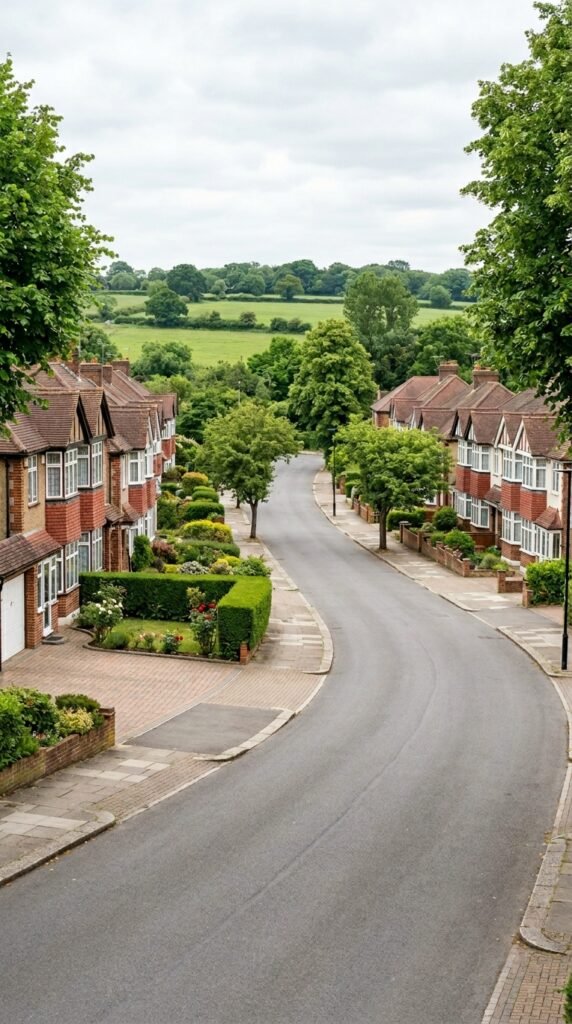
The western edge of the area toward the Eltham and Greenwich borders, with its own Falconwood Station and a noticeably greener, more open feel. Streets like Falconwood Avenue overlook farmland and open green space, and the area borders the sought-after Eltham Heights and Crown Woods Way. Substantial semi-detached and detached family homes, with the larger properties reaching £575K-£675K and the premium green-edge homes higher still. Long ownership is common, producing substantial move volumes.
East Wickham
The northern residential pocket toward Bexleyheath, with a mix of 1930s semis, terraces, and some flats. A solid, settled family area with good access to both Welling and Bexleyheath amenities. Three-bedroom semis and family terraces dominate, with prices broadly in line with the wider DA16 average. Conventional full-day family moves.
Loft Conversions and the Move Logistics
Welling’s family housing has one feature that comes up again and again in our moves here: the loft conversion. So many of the 1930s semis have been extended upward into the roof to add a fourth or fifth bedroom that it is worth understanding what that means for a move, alongside the standard considerations.
The loft-conversion top floor
A converted loft adds a bedroom, a study, or a bathroom in the roof space, reached by a staircase that is often steeper and narrower than the main stairs, sometimes a space-saving or spiral design. This creates two practical points. First, large furniture in the loft room (wardrobes, bed frames, desks, sofas) frequently has to be dismantled to come down the loft stairs, and occasionally a particularly large item has to come out through a dormer window with proper equipment. Second, the loft staircase shapes the carrying route and the crew numbers. We plan all of this in advance when you tell us there is a loft room, and we measure the access rather than assuming. We move a lot of Welling loft conversions and the workflow is well-practised.
Family-home moves on the residential roads
The bulk of Welling moves are conventional family-house moves on the 1930s suburban streets. Front-door loading, kerbside parking, established access. Standard 7.5-tonne Luton vans work on virtually all the residential roads. Steady turnover means we are often moving families who have been in a property 5-15 years, with the corresponding volumes, and we bring the right crew size for the realistic load.
Falconwood green-edge and larger-home moves
The substantial semis and detached homes in Falconwood and on the Eltham Heights fringe are larger jobs with bigger volumes, often from long ownership. Properties backing onto farmland or open green space have a solid rear boundary, so loading goes through the front and around the side. We bring full-day-plus scheduling and three or four crew for these homes.
High Street and station-area considerations
Properties close to the Welling High Street and around Welling and Falconwood stations can have busier daytime traffic and tighter parking, particularly during commuter peaks (7:00-9:30am and 5:00-7:00pm). We time loading on station-adjacent and High Street-adjacent streets to avoid the rush, and arrange a temporary parking suspension where a guaranteed loading spot is needed. Away from the High Street and stations, parking and access are straightforward.
Welling-Specific FAQs
My Welling house has a loft conversion. Does that affect the move?
Yes, and it is worth flagging when you book. Loft-converted Welling semis (and there are a great many) have a top-floor room reached by a staircase that is usually steeper and narrower than the main stairs. Large furniture in the loft room often has to be dismantled to come down, and occasionally a very large item needs to come out through a dormer window with proper lifting equipment. We plan the carrying route and crew numbers around the loft access, and we measure the actual property when quoting rather than assuming a standard layout. We move a lot of Welling loft conversions, so the workflow is well-practised. If you mention the loft room when you book, we factor it in from the start and send the right crew and equipment.
Should I use Welling Station or Falconwood Station?
Depends where in DA16 you are and where you are heading. Welling Station is the main station, central to the town and the High Street, on the Bexleyheath line to London Cannon Street and Charing Cross. Falconwood Station sits on the western edge toward Eltham, on the same broad network, and is the natural choice for Falconwood and Eltham Heights residents. Both reach central London in roughly 35-40 minutes. For a removal, neither station affects the move-day logistics beyond the parking pressure that builds around both during commuter peaks, which we plan loading around. The station choice is really a daily-life consideration rather than a moving one.
How long does a typical Welling house move take?
Depends on the property and whether there is a loft conversion. A two-bedroom flat or small terraced house is usually a half-day with two crew. A three-bedroom 1930s semi is a full day with three crew, a little longer if there is a converted loft to bring furniture down from. A larger Falconwood or Eltham Heights family home can run to a full day plus a returning morning. Costs range from roughly £200 for a small flat move to £1,500-plus for a large green-edge family home.
My Welling property is on the green edge near Falconwood, backing onto farmland. Does that change the move?
Only in the same way as other green-edge properties in our patch. A rear boundary onto farmland or open green space is solid, so the back of the property is unreachable for the van and all loading goes through the front and around the side if there is side access. The Falconwood streets near the open green space are otherwise standard wide residential roads with good access for standard 7.5-tonne Luton vans. We assess on the specific property when quoting, and if a particular road has any access constraint we will tell you and send the right vehicle.
Moving In or Out of Welling?
Send us your postcode, the property type, and let us know if it has a loft conversion, so we can plan the top floor properly. We’ll come back with a quote that fits the job and the realistic time needed. Usually within an hour during working hours.