
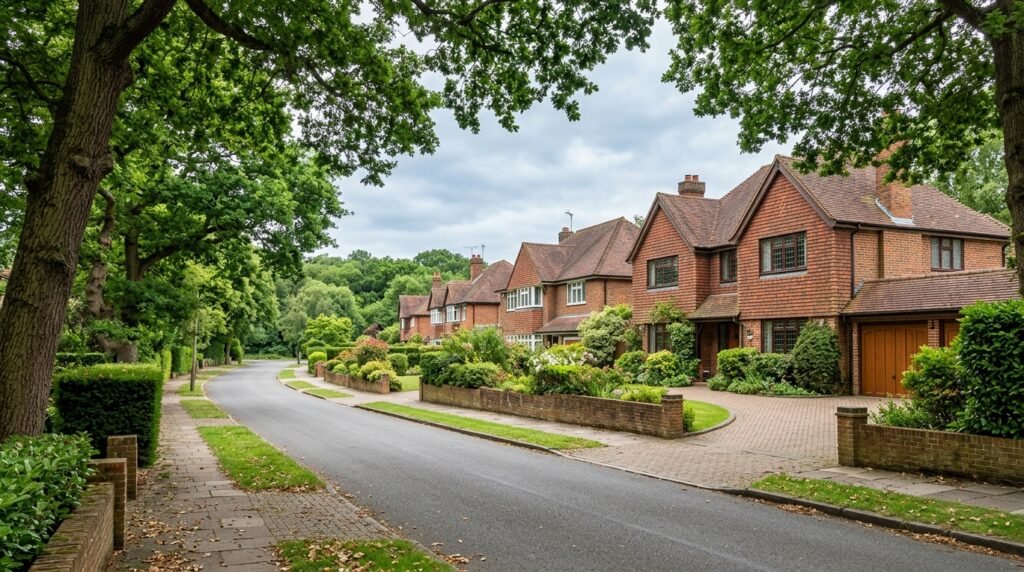
Removals in Chislehurst, South East London
Chislehurst has Chislehurst Caves underneath it, 22 miles of 13th-century chalk and flint mining tunnels. Chislehurst Common above it, 180 acres of woodland and heath saved from development in 1888. And one of the largest Conservation Areas in South East London preserving most of the period housing stock above. Average property values around £723,000, with substantial detached family homes reaching £1.5M-plus on the prestige streets. We handle moves into and out of all of it, with the careful conservation-aware approach the village genuinely requires.
A Conservation Village Saved by Local Campaign
Chislehurst’s character is the direct result of a deliberate preservation effort. In 1888, local residents campaigned successfully to save Chislehurst Common and the nearby St Paul’s Cray Common from development, at a time when most of the surrounding South East London suburbs were being intensively built out, the village deliberately walled itself off from that pattern. The Common today covers 180 acres of woods, heathland, ponds, and walking paths, managed by trustees rather than the local council. It’s the single largest unbuilt area in the inner Bromley borough.
On top of that early preservation work, the Conservation Areas covering 596 hectares of BR7 today protect the Victorian, Edwardian, and Georgian-style period housing stock from modern alteration. New-build supply in Chislehurst is rare by London standards, when new schemes do come to market, they’re typically small boutique developments (Elmstead Heights on Elmstead Lane has 8 apartments by McAllister Developments; Silver Leaves on Southill Road has 6 units), and they sell quickly. The conservation rules also mean that owner extensions on existing properties go through Bromley Council’s planning process with appropriate restrictions on changes to the original character.
The result is a village that genuinely looks like it did 100 years ago. The streets near St Nicholas Church, the Conservation Area pockets around Bishops Well and Lubbock Road, and the High Street area are all substantially preserved Victorian and Edwardian. Customer profile reflects this, Chislehurst residents are typically established families and senior professionals who specifically chose the heritage character over the newer suburban alternatives, and tend to stay 15-25 years.
Chislehurst is part of our wider Bromley coverage area. If you’d like to see how we handle the rest of the borough, the parent page covers it.
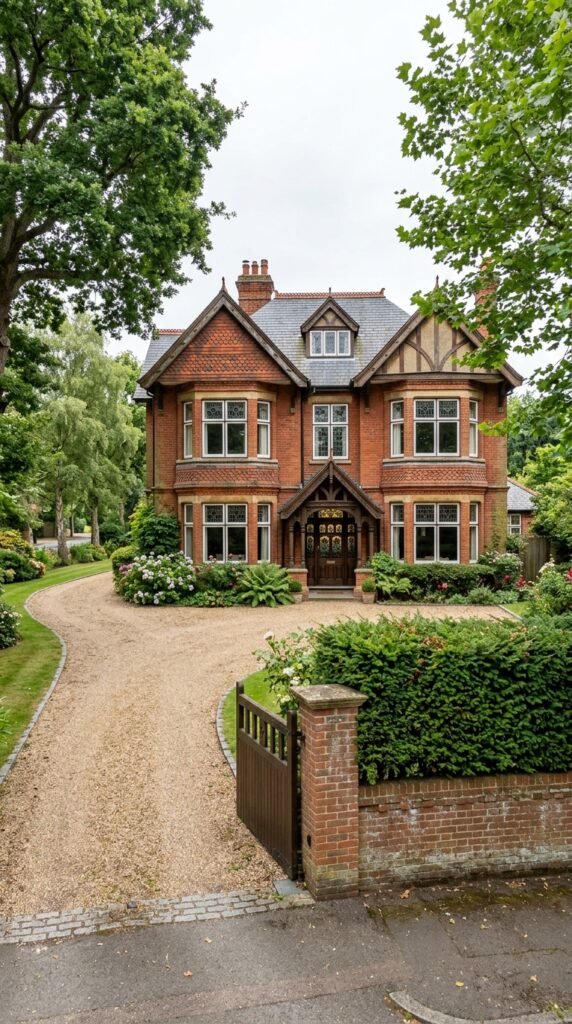
Caves, Commons, and Property Values
Three distinct property tiers operate in Chislehurst. The Conservation Areas drive premium values; the Common-adjacent streets carry their own particular character; the more standard suburban streets at the edges of the village offer the entry points.
Apartments and entry tier
Two and three-bedroom flats in conversion buildings, the boutique new-build schemes (Elmstead Heights at £408K-plus, Silver Leaves at similar tiers), and the modern apartment buildings near the three stations. Some Georgian-style townhouse conversions on the edges of the Conservation Area also sit in this bracket. Move logistics are typically half-day or short full-day jobs with two or three crew.
Family homes, semis and modest detached
Three and four-bedroom semi-detached and detached houses on the Conservation Area streets and the residential roads near the three stations (Chislehurst, Chislehurst West, Elmstead Woods). Period features throughout, bay windows, decorative ceiling roses, original cornicing, parquet flooring, narrow stairs that turn at the top. Long occupations are normal (12-18 years typical), so move volumes are substantial. Full-day jobs with three crew.
Premium detached and prestige homes
Substantial Edwardian and Victorian detached houses on the prestige Conservation Area streets, including the houses around the Common itself and the most desirable residential roads. Some properties have been substantially extended over the original footprints (side extensions, loft conversions, conservatories), so the actual floor area is larger than the original Victorian footprint suggests. Move volumes are very high, typically 4-5 Luton loads of contents, with substantial outbuilding, garden, and inherited furniture handling. Full-day plus, four-person crew minimum, often a returning morning.
Moving In and Out of Conservation Properties
Conservation Area properties have specific handling requirements that go beyond standard period property moves. The combination of original construction methods (often pre-1900), planning protection on the external character, and the prevalence of substantial accumulated furniture in long-occupied homes creates a particular move profile.
Original features that need protection
Most Chislehurst Conservation Area properties retain genuine period features, original parquet or board floors that scuff easily under wheeled equipment, decorative cornicing and ceiling roses that catch tall furniture being carried through doorways, narrow original staircases that turn at the top (which means furniture must be carried up at angles or dismantled), low original doorways in some upper rooms (sometimes under 6 feet, which doesn’t take a standard king-size mattress without dismantling), stained-glass windows or original sash mechanisms that can be damaged by careless movement of large items, and traditional construction methods that mean walls and floors are less forgiving than modern equivalents.
We use floor runners on every original floor, carry rather than wheel through period spaces, dismantle furniture that won’t pass through the original door widths, and bring multi-person teams sized for the volume rather than for the cost-minimising option. Conservation property moves take longer because they should, and we factor that into the quote upfront.
Conservation Area access constraints
The Conservation Area planning rules don’t directly restrict move-day access, but they do affect what’s possible in terms of garden gate widening, driveway alterations, or temporary structures during moves. Some Chislehurst Conservation properties have very narrow original side gates or front paths that don’t allow for our larger trolley equipment. We assess on the specific property when quoting and bring appropriately sized carrying gear, sometimes a longer carrying distance from the van is unavoidable, and we plan for that rather than damaging period features by trying to force access.
The accumulated possessions reality
Long-occupation Chislehurst families typically produce 30-40% more move volume than equivalent properties in newer suburbs. A 4-bedroom Conservation Area detached occupied for 20 years often produces 4-5 Luton loads of contents, 1,500 to 2,000 boxes’ worth when fully packed, plus separate handling for garden equipment, outbuilding contents, and inherited furniture pieces. We strongly recommend our packing service for the bulk of these moves; most customers keep clothing and books to pack themselves but ask us to handle everything else.
Chislehurst-Specific FAQs
My Chislehurst property is in an area with Chislehurst Caves underneath. Should I worry about subsidence affecting the move?
Not directly for the move itself. The Chislehurst Caves are 22 miles of historic chalk and flint mining tunnels that run beneath parts of the village. Some property surveys in BR7 do raise non-coal mining considerations because of the historic workings. However, this is a property purchase consideration handled by your solicitor’s environmental searches, not a move-day issue. The actual loading and transport of your belongings doesn’t change because of cave-related ground conditions. If your survey flagged subsidence concerns, that’s between you, your surveyor, and any specialist geotechnical advisors, it doesn’t affect what we do on move day. We mention this because customers occasionally ask, and the answer is reassuring.
Does the Conservation Area status affect what you can do during the move?
The Conservation Area planning rules don’t directly restrict move-day activities, we don’t need any planning permission or special permits to bring a van to your property, even one in the most protected pockets of the village. What does affect us is the physical character of the protected properties: narrow original gates, fragile period features, original boarded floors, and the substantial volume that long-occupied homes contain. We treat all of these with care, bring the right equipment, and factor the realistic time needed into the quote. So the Conservation Area status affects ‘how we work’ rather than ‘whether we can work,’ if that distinction makes sense.
Three stations sit close to Chislehurst, which is best for which destination?
Chislehurst Station is the main one, on Summer Hill, with direct services to London Charing Cross and Cannon Street. Elmstead Woods Station (just over the border from BR7) offers similar central London services, often slightly less crowded at peak hours. Chislehurst West Station (smaller, on the western edge) serves more local routes. Most residents use Chislehurst Station for daily commuting, with Elmstead Woods as the alternative when there are works or service issues on the Chislehurst line. For our purposes, the move day, parking pressure is similar around all three stations during commuter peaks, so we time loading to avoid 7:30-9:30am and 5:00-7:00pm windows on weekday moves near any of them.
Why are new builds so rare in Chislehurst?
Three reasons combine. First, the Conservation Areas (596 hectares of protected status) limit the demolition of period properties to make way for new builds. Second, the Common and Green Belt designations to the north and east restrict expansion of the village footprint. Third, the historic mining considerations under parts of BR7 add geotechnical complexity for any new construction. The result is that new schemes are typically small boutique conversions or infill (the 8-apartment Elmstead Heights, the 6-unit Silver Leaves) rather than the larger developments common in other South East London suburbs. From a removal perspective this means most Chislehurst moves are into established period properties, and we’re set up for that.
Moving In or Out of Chislehurst?
Send us your postcode and a quick note on the property, whether you’re in a Conservation Area street, a Common-adjacent road, or one of the smaller modern conversions. We’ll come back with a quote that fits the period and the realistic time needed. Usually within an hour during working hours.