
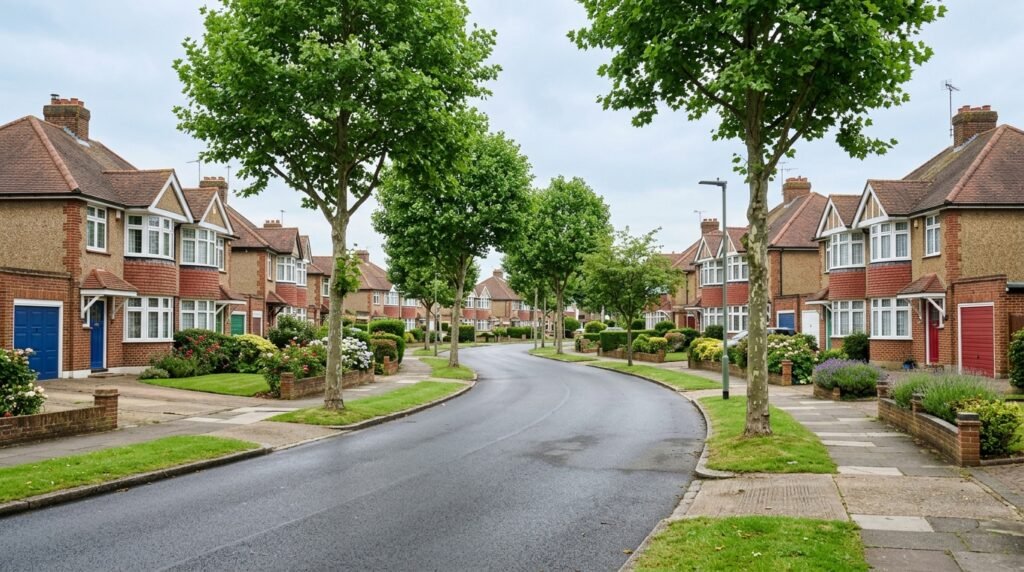
Removals in Orpington, South East London
Orpington has 575 streets, 21,000 properties, and one of the fastest commuter trains to central London anywhere in our patch, 18 minutes door-to-door from Orpington Station to Cannon Street. Add the grammar school catchments for St. Olave’s and Newstead Wood, the surrounding villages from Locksbottom to Chelsfield, and the price range from £140K flats to £2.7M Holwood Park Avenue houses, and you have the most varied moving market we work in BR6. We cover every postcode pocket and every property type.
A 575-Street Patch With a Fast Train
Orpington is genuinely substantial. The BR6 postcode alone contains 575 streets and over 21,000 properties, more than four times the size of a typical Kent commuter village. The BR5 postcode to the north adds Petts Wood and the streets toward Chislehurst. Together they form one of the largest single suburban patches in our entire coverage area. Average house prices in BR6 sit around £598,000 to £623,000, but the spread is enormous: £140,000 one-bedroom flats around the town centre, £525K detached houses on Winchester Road, £700K-£1M family homes on the more desirable streets, £1.4M modern detached properties, and the £2.7M average on Holwood Park Avenue at the prestige end.
The single feature that ties all of this together is the train. Orpington Station and Chelsfield Station both offer fast services to central London, 18 minutes to Cannon Street, around 30 minutes to Victoria with one change. That commute speed, combined with the price differential against inner London, is the reason most Orpington families chose the area. Properties within a 15-minute walk of either station carry a meaningful premium, and customers often ask for moves to be timed around station access during commuter peak hours.
The BR5/BR6 distinction is worth understanding. BR5 covers the northern half, Petts Wood (which is a separate sub-area in our coverage) plus parts of central Orpington including the Crown Lane area, St Mary Cray, and the Ramsden Estate. BR6 covers the southern half, Orpington town centre, plus the surrounding villages of Farnborough, Locksbottom, Crofton, Green Street Green, Chelsfield, Downe, Pratt’s Bottom, and Well Hill. Both share the same school catchment dynamics and broadly similar property markets, but BR6 leans slightly more suburban-rural and BR5 slightly more inner-suburban.
Orpington is part of our wider Bromley coverage area. If you’d like to see how we handle the rest of the borough, the parent page covers it.
The Grammar School Effect
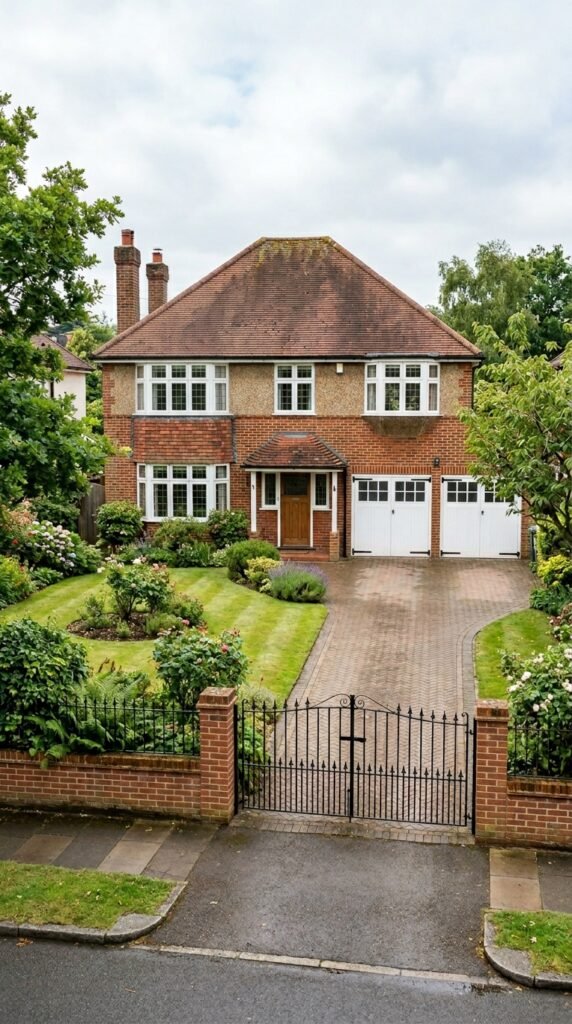
More than half the family moves we handle in Orpington are driven by grammar school catchment positioning. St. Olave’s Grammar School and Newstead Wood School are both nationally significant selective state grammar schools that take their intake based on the Kent Test (sat in early September of Year 6). Darrick Wood School is the strong non-selective alternative for children who don’t sit or don’t pass the test. Holy Innocents Catholic Primary, Warren Road Primary, St Olave’s and St Saviour’s, and Tubbenden Primary are the dominant feeder primaries. Together, this educational ecosystem makes Orpington one of the most school-catchment-driven property markets in our coverage area.
The Year 6 positioning pattern
Most Orpington grammar-driven moves happen when children are aged 7-10. Families buy into the catchment area early enough to be settled before the Year 6 Kent Test in September. We see significant booking volume from April through August each year as families complete on purchases timed for summer moves before the new school year. This window is the busiest of our Orpington calendar and we book up 6-8 weeks in advance for these completions.
The post-Kent-Test cycle
The second peak is October-November after Kent Test results come out in mid-October. Families who were waiting on the result before committing to a Orpington move suddenly all act at once, with properties listed in late October typically completing in January-February. Winter Orpington moves are completely fine logistically, we run the same crew quality and pace as summer moves.
The downsize after schooling
The flip side of the catchment effect, families who moved into substantial 4-5 bedroom Orpington homes when their children were primary age now downsize to smaller properties (either within Orpington or to Kent retirement areas) when the children leave home in their late teens or early twenties. These moves are characterised by 15-20 year occupations and substantial volumes of accumulated possessions. We handle many of these per year, particularly in spring and early summer when downsizers prefer to be in their new property before the warmer months.
The Surrounding Villages
BR6 extends well beyond Orpington town centre. Eight surrounding villages and hamlets share the postcode and contribute substantially to our local move volume. Each has its own character worth understanding.
Farnborough and Locksbottom
West of Orpington centre, along the Farnborough High Street and the Locksbottom area, properties range from 1930s semis to substantial detached homes. Princess Royal University Hospital sits on the Farnborough Common boundary, which gives the area a similar NHS-workforce-led demographic to what we see in Darenth’s Village Park. Move volumes are typical of established family suburbs.
Green Street Green and Pratt’s Bottom
South of Orpington town, Green Street Green is a village in its own right with a green, period properties, and a more rural character. Pratt’s Bottom (yes, that’s the real name) is smaller still, a hamlet on the lanes toward Knockholt and Halstead. Properties here range from period cottages to substantial detached executive homes. Access via narrow rural lanes for the more remote properties, we send 3.5-tonne vans where appropriate.
Chelsfield and Well Hill
East of Orpington centre, Chelsfield has its own railway station (the second fast-train option for residents) and a rural-suburban feel. Well Hill is smaller and more rural still. Properties here lean substantial, 4-5 bedroom detached on generous plots. Some of the most premium BR6 properties sit in this pocket, particularly the houses with direct access to the surrounding countryside and the North Downs.
Crofton and Downe
Crofton is the area between Orpington and Chelsfield, with a mix of 1930s semis and modern infill housing. Downe is the historic village a few miles south, famous as Charles Darwin’s home for 40 years (Down House, where he wrote ‘On the Origin of Species’). Properties in Downe include some genuinely historic listed buildings alongside more modern infill. Heritage-property handling applies for the listed Downe properties, floor runners, careful carrying, dismantling for period door widths.
Orpington-Specific FAQs
My child is sitting the Kent Test this September. When should I plan the move?
Before, comfortably. The Kent Test is sat at the child’s primary school during the school day in early-to-mid September. Moving immediately before the test (within two weeks) creates unnecessary disruption, new routine, unfamiliar surroundings, the upheaval that comes with any move. If your purchase is going to complete in September, we recommend either accelerating to be fully moved in by mid-August (which means exchanging by mid-June at the latest), or delaying to late September or October once the test is behind you. We can arrange short-term storage in either scenario if the move dates don’t align cleanly with the completion. Talk to your solicitor about completion-date flexibility, most chains can absorb a 2-3 week shift to accommodate this. We see exactly this conversation 50+ times a year in Orpington bookings.
What’s the difference between a BR5 and BR6 Orpington move?
Geographically not much, they share borders and similar property markets. Practically, BR5 (northern Orpington plus Petts Wood) leans slightly more inner-suburban, with denser housing and tighter parking on some streets. BR6 (southern Orpington plus the surrounding villages) leans more spread-out, with longer driveways, wider streets, and easier vehicle access. Our hourly rates and crew rates are identical across both postcodes, the practical difference is that BR6 moves can sometimes use larger vans more easily, while BR5 occasionally needs a 3.5-tonne shuttle on tighter streets near Crown Lane or Ramsden Estate. We assess on the specific address when quoting.
My property is on Holwood Park Avenue. What does that mean for the move?
Holwood Park Avenue is the prestige address of BR6, with average sale prices over £2.7M and the largest houses on the road reaching £4M-£5M. Move profiles here are full-day-plus, often spread over two days, with four crew minimum and substantial protection equipment for heritage furniture, period features, and antique contents. Many properties have long private driveways, multi-car garages, and substantial outbuilding contents (pool houses, summer houses, equestrian buildings) that add to the volume. We send our most experienced lead crew member for Holwood Park Avenue moves because the customer expectations and the value of what’s being moved both deserve careful handling.
Can your van park near Orpington Station during commuter hours?
Yes, but with planning. The streets immediately around Orpington Station, Station Road, Cray Road, the surrounding side roads, get tight during weekday commuter peaks (7:00-9:30am and 5:00-7:00pm) as residents compete with rail commuters for parking. We schedule station-area moves to start either before 7:00am or after 9:30am to avoid the rush. The Nuggets Shopping Centre on Orpington High Street and the Walnuts Centre also generate retail traffic that affects parking on the surrounding streets on Saturdays, so we plan around that for Saturday moves.
Moving In or Out of Orpington?
Send us your postcode and a quick note on the property, central Orpington semi, surrounding village detached, or one of the substantial Holwood Park Avenue-tier homes. We’ll come back with a quote that accounts for the geography, the school-calendar realities, and the realistic time needed. Usually within an hour during working hours.