
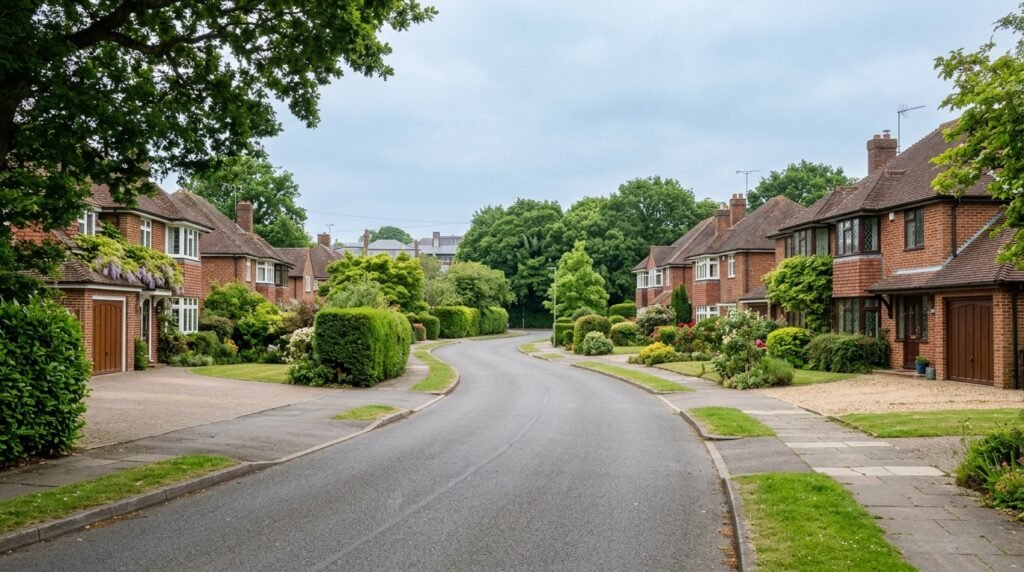
Removals in Wilmington, Kent
Wilmington is the Dartford-area suburb where the postcodes get more expensive the closer you get to the grammar schools. Two selective state grammars, Wilmington Grammar School for Boys on Common Lane and Wilmington Grammar School for Girls on Parsons Lane, shape almost every property decision around here. We move a lot of families in, and a steady stream out as kids finish their schooling.
A Village Where the Schools Drive Everything
Most Kent suburbs are defined by their train station, their high street, or their housing stock. Wilmington is defined by its schools. Wilmington Grammar School for Boys (established 1950, on Common Lane) and Wilmington Grammar School for Girls (established 1958, on Parsons Lane) are selective state grammar schools that take their intake based on the Kent Test, a Year 6 selection exam. Combined, the two schools educate roughly 1,750 pupils. The catchment for both is geographically tight, and families across North Kent and South East London move into Wilmington specifically to position children for that intake.
Wilmington also has Wilmington Primary School, a strong primary that feeds into the grammar schools, and Wilmington Academy, a non-selective secondary for children who don’t sit or don’t pass the Kent Test. The village functions as a substantially complete educational ecosystem for ages 4 to 18 within its own boundaries.
In practical terms for removals, this creates a customer base with very specific characteristics. Wilmington customers tend to be families with children aged 6 to 11 (positioning for the grammar test), or families with children at the grammar schools themselves who are upsizing within the village to handle teenagers. Properties are larger than the Stone or Greenhithe average, occupations are longer (10-20 years typical), and the move volumes per booking are higher.
Wilmington is part of our wider Dartford coverage area. If you’d like to see how we handle the rest of the patch, the parent page covers it.
Property Tiers and What School Proximity Costs
Wilmington property prices map neatly onto distance from the grammar schools. The closer you are to Common Lane, Parsons Lane, and the central village streets, the higher the price per square foot. The data on this is consistent enough that estate agents typically lead with the school proximity in their listings.
Entry tier: terraces and smaller properties
Terraced houses on Barn End Lane, smaller properties on Common Lane and Hawley Road, and two-bedroom cottages on the outer edges of the village. Three-bedroom mid-terraces typically run £375-425K. Two-bedroom semi-detached cottages near the schools sit around £350-375K. These properties are the entry point for catchment-positioning families, buy now while children are 6 or 7, sit the Kent test from this address. Move volumes are typical of three-bed terraces or semis. Half-day to full-day with a two or three-person crew.
Standard family homes
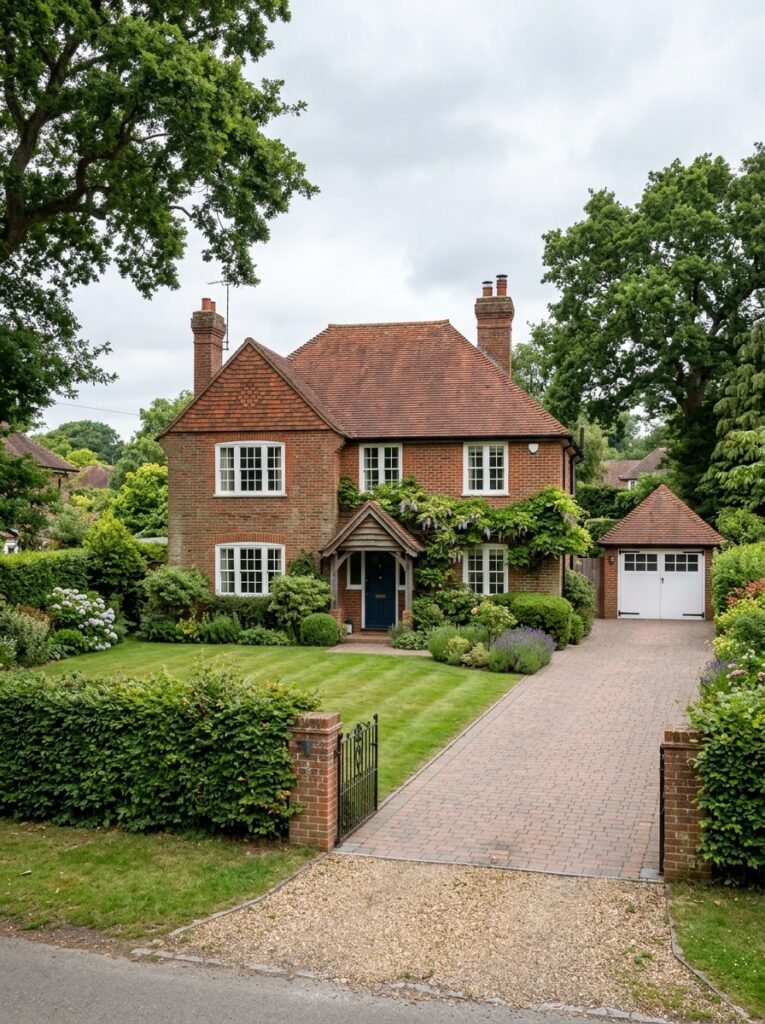
Three and four-bedroom semi-detached and detached houses on Whitehead Close, The Close, Rowlatt Close, and the surrounding cul-de-sacs. This is the bulk of Wilmington’s family market. Properties typically have driveways for two or more cars, garages, and gardens of 40-60 feet. Often occupied 10-15 years by the time they come back to market, so move volumes are substantial. Full-day jobs with three or four crew.
Premium family homes
Four to six-bedroom detached houses on the most desirable streets, Church Walk, the larger properties on Common Lane, and the bigger plots on Parsons Lane and surrounding lanes. Church Walk in particular is the prestige address. Properties here are often substantially extended over their original footprints (loft conversions, side extensions, kitchen-diner rear extensions). Move volumes can be very high, 5-bed detached with 20+ years occupation regularly produces 4 or 5 Luton loads. Full-day plus, four-person crew minimum, often a returning morning for the loft and garage.
Timing Your Move Around the School Calendar
Wilmington moves cluster around the school calendar more than any other location in our Dartford patch. Understanding the rhythm helps you book at the right time and avoid the busy windows.
The biggest single peak is the summer holiday, late July through to early September. Families who’ve exchanged on a purchase want to be settled before the new school year starts in early September. Wilmington-bound moves through this window are at their highest. We book up 6-8 weeks in advance for summer Wilmington completions, and weekends in mid-August are often the first to fill. If your completion is in this window, contact us as soon as you have an exchange date confirmed.
The other significant peak is the Kent Test announcement period, early to mid-October, when results come out and families who’ve been waiting to commit to a Wilmington move suddenly all act at once. Properties listed in late October and through November often complete in January or February, which becomes the secondary peak month for us. Winter Wilmington moves are perfectly fine logistically, we work through January and February with the same crew quality as summer.
The window to avoid if possible is the two weeks immediately around Kent Test sitting (typically early September). Families with Year 6 children prefer not to move during the test itself, and the resulting clustering around it makes booking harder. If your child is sitting the test that year, schedule the move to be either fully complete by mid-August or planned for after the test in late September or October.
Mid-term breaks (half-terms, Christmas, Easter) are popular for moves involving children at the grammar schools themselves, because the kids can help with packing rather than disappear into school routines during the chaos. We accept bookings for these windows but recommend confirming 4-5 weeks ahead because they fill faster than ordinary weeks.
Wilmington-Specific FAQs
How close to the grammar schools do I actually need to be?
As a removal firm we don’t advise on grammar school admission strategy, that’s between you, the school admissions team, and your solicitor. But customers ask this routinely, so for context: the published admission criteria for Wilmington Grammar School for Boys and Wilmington Grammar School for Girls are based on the Kent Test result first, with geographic proximity as a tiebreaker for children scoring the same. Distance is measured as a straight line from the school site to the home address. Different specific catchment radii apply each admission year depending on intake. The general pattern is that properties within Wilmington village (postcodes DA2 7) have meaningfully better proximity scores than properties in surrounding areas like Hawley, Sutton-at-Hone, or southern Dartford. We recommend the school admissions teams as the authoritative source for current-year specifics.
Is the catchment the same for the boys’ and girls’ grammar schools?
Geographically similar but not identical, the two schools are about half a mile apart (Common Lane and Parsons Lane) and use their own admission boundaries. For most Wilmington village properties this isn’t a practical difference because the village itself is well within both catchments. The distinction matters more for families on the village edges or in the surrounding Hawley and Sutton-at-Hone areas. If you have one child of each gender, both schools are realistic options from most Wilmington addresses. If you’re moving from outside the area specifically for one school over the other, double-check the specific catchment with that school’s admissions team before committing to a property.
My child sits the Kent Test in September. Should we move before or after?
Before, comfortably. The test is sat at the child’s primary school during the school day in early-to-mid September. The result is the deciding factor for grammar school admission. Moving immediately before the test (within two weeks) creates unnecessary disruption, new routine, unfamiliar surroundings, the upheaval that comes with any move. If your purchase is going to complete in September, we recommend either accelerating to be fully moved in by mid-August (which means exchanging by mid-June at the latest), or delaying to late September or October once the test is behind you. We can arrange short-term storage in either scenario if the move dates don’t align cleanly with the completion. Talk to your solicitor about completion-date flexibility, most chains can absorb a 2-3 week shift to accommodate this.
Why are Wilmington moves so much bigger than equivalent Stone or Greenhithe moves?
Length of occupation. The typical Wilmington family stays in their home through both children’s secondary education at the grammar schools, which is a 7-year run minimum (Year 7 through Year 13 for sixth form). Many families stay longer because younger siblings follow. The result is that when properties come back to market, they’re often 15-20 years occupied with all the accumulated possessions that implies, loft contents that have grown organically across two decades, garage stuff from multiple children’s hobby phases, garden equipment from when the garden was different. We quote Wilmington moves with this in mind. A 4-bed Wilmington semi typically produces 30-40% more volume than the same nominal property in Stone, where the average occupation is shorter.
Moving In or Out of Wilmington?
Send us your postcode, the property size, and whether your move is school-calendar driven. We’ll come back with a quote that accounts for the volume realities and the timing constraints. Usually within an hour during working hours.