
Removals in Southfleet, Kent
Southfleet is the small one. A proper village built around a crossroads three miles southwest of Gravesend, with a 14th-century church, the Ship Inn, Broaditch Farm Shop, a primary school, and not much else. The parish stretches out to include the hamlets of Betsham and Westwood, and the newer developments creeping in from the Ebbsfleet side. We do moves across all of it.
The Village That Time Almost Forgot
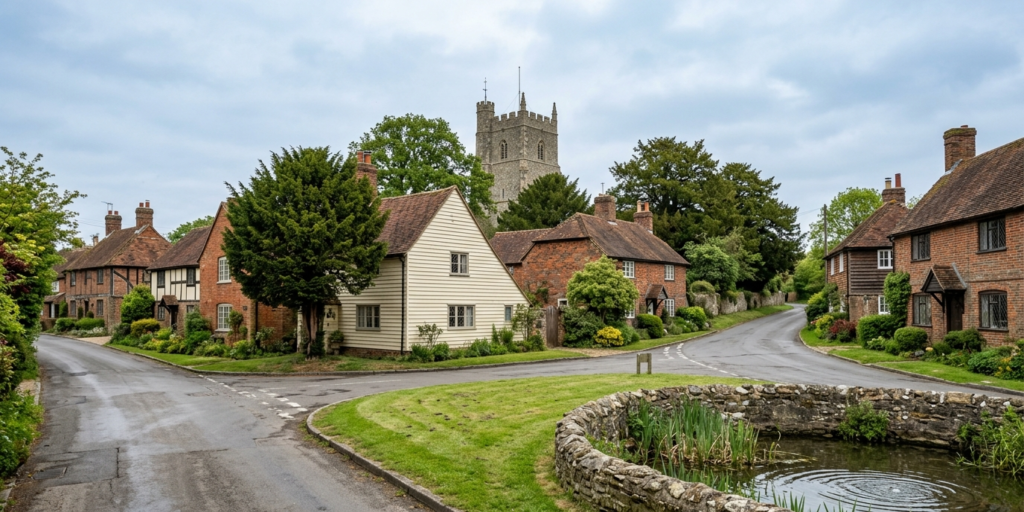
Stand at the Southfleet crossroads and look around. The Ship Inn on one corner. The lane to the church on another. Red Street running south past the duck pond and Broaditch Farm Shop. A handful of period cottages, some weatherboarded, some brick-and-flint, almost all of them several centuries old. That’s most of Southfleet village right there. St Nicholas Church, the parish church on the lane, has 14th-century origins, and pre-Roman Christian remains have been found in the area, making this one of the older continuously-inhabited sites in North Kent.
Southfleet’s name comes from the River Fleet, a minor tributary of the Thames that originally flowed from Springhead through here on its way to Ebbsfleet and Northfleet. The river is mostly hidden now, but the geography it created, the gentle valleys, the slightly raised ground around the church — still shapes where the houses sit. Most of the village runs in a thin curve along Red Street, New Barn Road, and Northfleet Green Road, with the older buildings concentrated nearest the crossroads.
The reason Southfleet stayed so small is that it never had a railway. Southfleet did have a station between 1886 and 1953 on the Gravesend West Line, but the line closed and the trackbed was eventually used by Eurostar for the high-speed link to St Pancras. The closure meant Southfleet never developed into a commuter town the way Northfleet, Gravesend, and Dartford did. Today the village has roughly the same footprint it had 100 years ago, plus a few recent low-density developments at the edges.
Southfleet sits in Dartford borough rather than Gravesham, but for removal purposes we treat it as part of our wider Gravesend coverage area since we work it weekly. If you’d like to see how we handle the rest of the patch, the parent page covers it.
Betsham, Westwood, and the Parish Outliers
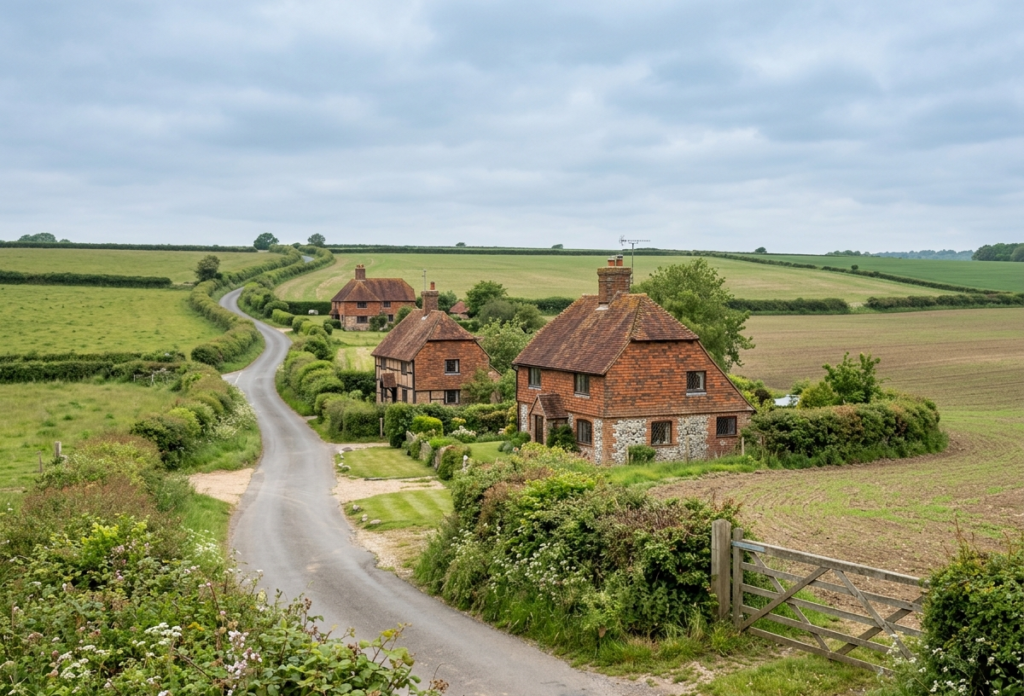
Southfleet parish isn’t just the village. It extends outward to include the hamlets of Betsham (a small cluster of houses on the lane to Hartley) and Westwood (a few properties further west toward the A2). New Barn used to be part of the parish until 1987, when it was transferred to its own administrative parish, but in practice the local geography hasn’t changed, moves to and from New Barn are functionally the same as moves to and from the rest of the area.
The hamlets share the village’s character but at even smaller scale. Two or three houses on a single lane, fields on both sides, the nearest neighbour 50 metres away. Access to these properties is usually fine for our standard removal vans, but the approach lanes can be narrow with overhanging branches in places, so we usually do a quick map check at quoting to confirm which size van to send. Properties on the more remote outer edges of the parish sometimes need a 3.5-tonne Luton instead of a 7.5-tonne, same coverage capacity for a typical move, just better suited to the lanes.
Move volumes from hamlet properties tend to be higher than you’d expect because the houses are larger and the gardens are extensive. A two-bedroom Betsham cottage usually has a garden five times the size of a Northfleet two-bedroom, which means garden equipment, outdoor furniture, garden room contents, and often the contents of a stable or large outbuilding. Plan for an extra two to three hours over the equivalent in-village move.
The New-Build Edge
The other side of Southfleet, less obvious from the village core, is the gradual creep of new-build housing in from the Ebbsfleet direction. Developments at Fred Mead, Pescot Avenue, and properties off the lanes connecting toward Longfield have brought modern detached and link-detached homes to what used to be agricultural land at the parish edge.
These properties feel different from the village core. Wider doorways, modern stair widths, integral garages with EV charging points, contemporary kitchens with island layouts. The buyers are different too, often families who’ve moved out from Ebbsfleet Valley or the Dartford new-builds for slightly more space, slightly larger gardens, slightly more ‘countryside’ even if it’s only a short distance away. Move volumes from these properties are bigger than from the village cottages because they were built for storage and the families haven’t been there long enough to thin things out.
Pricing on the new-build edge runs from around £575,000 for a modern detached up to £1,150,000 for the larger five and six-bedroom houses. These are full-day moves with three or four crew, and they often involve coordination with the developer’s site office if the property is on a development still under final completion.
Where Southfleet gets interesting for a removal firm is the customers who move within Southfleet itself, from a village-core period cottage to a Fred Mead modern detached, or the reverse. The architectural distance between a 17th-century cottage and a 2020s detached is significant. We’ve moved families both ways and the logistics couldn’t be more different even though the journey might be 800 metres.
Southfleet-Specific FAQs
Southfleet is in Dartford borough rather than Gravesham. Does that matter for the removal?
Not for the actual move, no, we work the area weekly and the borough boundary is invisible to a removal firm. It matters slightly for paperwork (council tax band lookups, parking permit applications if needed) which we handle on your behalf if relevant. The DA13 9 postcode covers most of the parish. We don’t add an out-of-area surcharge for Southfleet despite the Dartford borough designation.
My property is in Betsham or Westwood. Can your van reach it?
Yes for our standard removal vans, with some judgement on which size to send. The lanes to Betsham and Westwood are narrow in places with overhanging branches, so for properties on the most remote sections we send a 3.5-tonne Luton instead of a 7.5-tonne. The total capacity for a typical residential move is similar, we just plan for slightly more trips with a smaller vehicle if the volume requires it. Send us the postcode at quoting and we’ll work out the right vehicle from the access.
I’m moving from a Grade II listed cottage near the crossroads. Will the move be slower?
Yes, deliberately so. Listed cottages in the Southfleet core have low doorways, original boarded or flagstone floors, exposed beams, and often very tight stairs. We use floor runners, carry rather than wheel, and dismantle furniture that won’t fit through the original door widths. A two-bedroom listed cottage move that would be a half-day in a modern equivalent is usually a full day here. We build that time into the quote so there are no surprises.
What if I need somewhere to keep my belongings between completion dates?
Common request from Southfleet buyers because the property purchases tend to be more complex (chain dependent, listed building survey delays, conservation area planning queries). We can arrange containerised storage at our partner facility on a flexible basis, weekly pricing, no long lock-in. The same crew that loads on move-out day handles delivery to your new property when you’re ready. Useful for the realistic gap between leaving the old place and getting into the new one.
Moving In or Out of Southfleet?
Send us your postcode and a quick note on the property, whether it’s a village core cottage, a new-build off the lanes, or a hamlet property in Betsham or Westwood. We’ll come back with a quote that accounts for the access and the realistic time. Usually within an hour on weekdays.